Alberto Oggero
- Roero, Piedmont, Italy
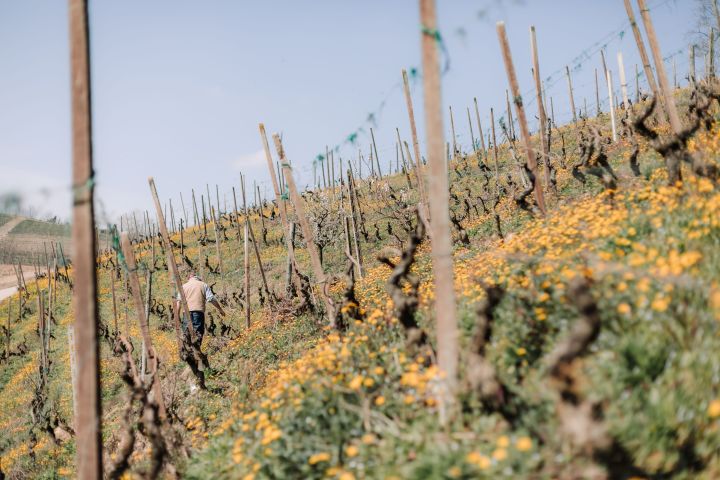
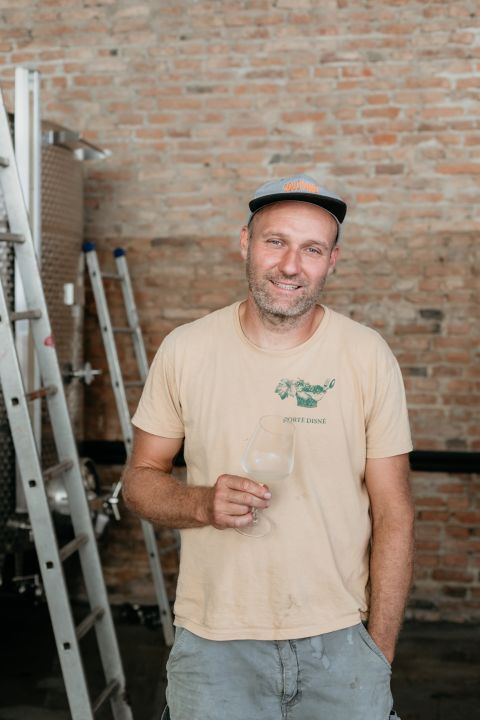
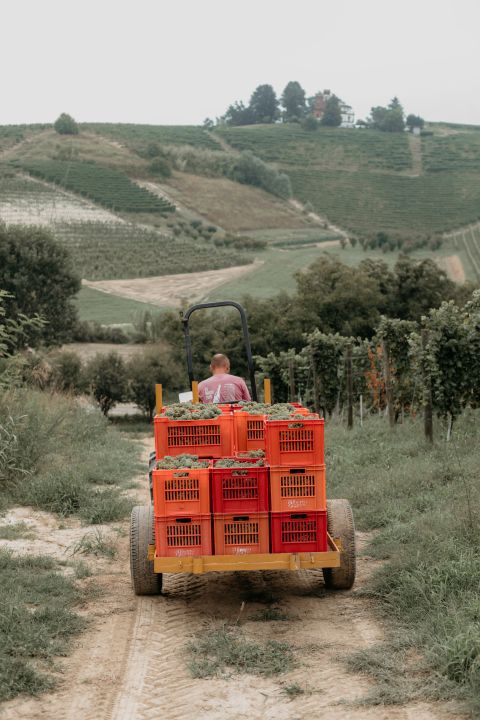
Alberto Oggero was born and raised in the Roero region, surrounded by people who made wine. His great-grandfather made large amounts of it from these hills, enough to have a stall of horses for its transport during sales trips to the big city of Torino, even winning a gold medal at the 1900 Paris World’s Fair for the quality of his “Nebbiolo del Roero.” Alberto’s grandfather continued: a prized family video from 1974, filmed on Super 8, captured harvest in the Le Coste vineyard and foot-treading of grapes in the very cellar where the wine is made today. Alberto’s parents and close relatives followed a different path, though, taking up factory work in the city. Farming and winemaking operations ceased. Against this backdrop, Alberto began dreaming of reassembling vineyards and starting from scratch, with his initial amateur experiments happening between 2003 and 2008. In 2009, he released his first Arneis label, followed in 2011 by his first Nebbiolo. Winemaking remained a part-time endeavor until 2016, when it became his sole career. Today, the estate employs four people and is comprised of 13 hectares of land in Santo Stefano Roero—7.5 of which are vines and the rest woods, vegetable gardens, and mixed-grain cultivations for family use.
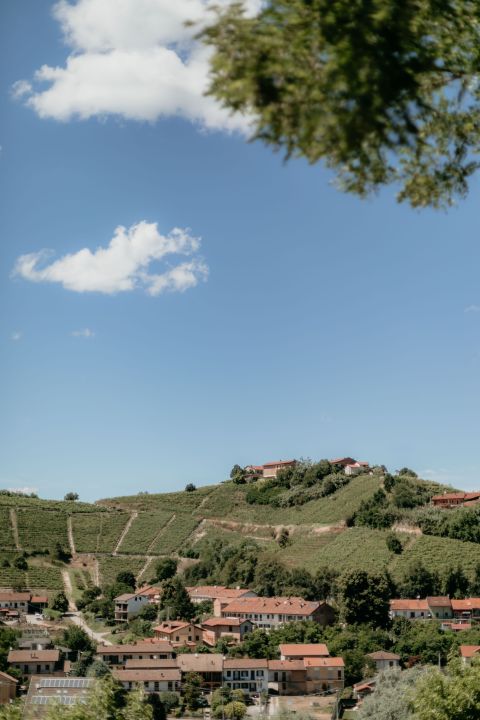
The Roero rarely gets its propers, so often is it cast in shadow or drowned out by its shinier and chattier next-door neighbors, Barbaresco and Barolo. Yet, the Roero has made quality wine for just as long and has always had its own important, parallel story to tell. Compared to the “Bs,” Roero’s boundaries are larger, but there is far less land dedicated to vine. Forest and polyculture still dot the landscape. There are renowned Roero-specific varieties of peaches, pears, strawberries, and chestnuts. This is the type of balance that people like Beppe Rinaldi and Bartolo Mascarello so vociferously fought to preserve in their nearby world.
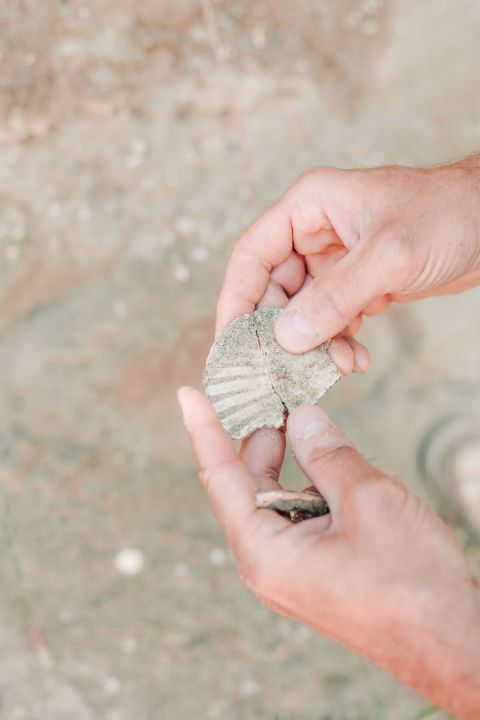
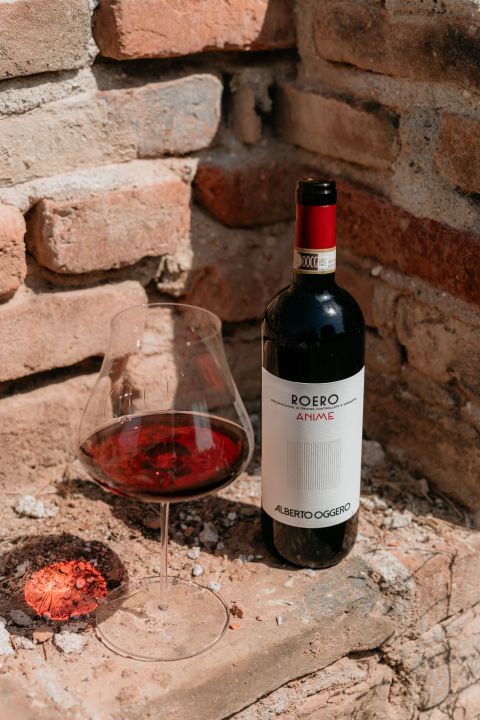
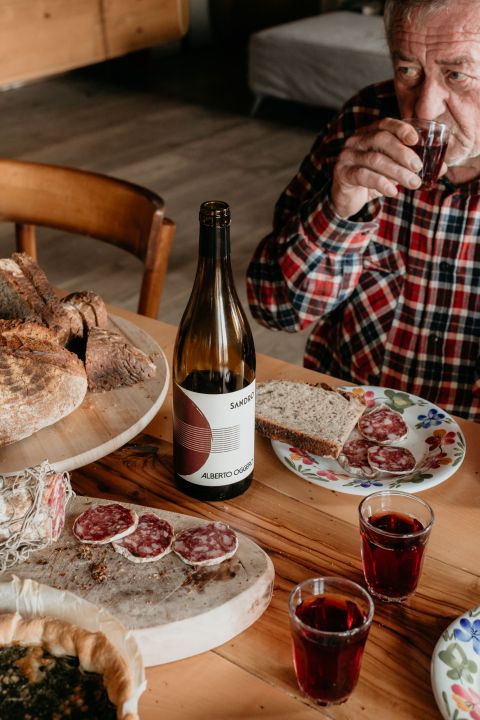
Geologically, the landmass of the Roero emerged “recently,” during the Pliocene epoch, two to three million years ago, before which it had been under a shallow tropical sea with gentle currents. Today’s resulting topsoils are characterized by extremely high percentages of sand and intact marine fossils. This friability is felt as it sifts through one’s fingers, and it’s visible at a distance, with erosion forming steep vineyards and, in extreme cases, sheer cliffs known as the rocche di Roero. Alberto didn’t recall the exact gradient percentage of his beloved old-vine plot in the cru of Anime, but he says, “I have dreams about it at night. And they’re nightmares!” The vineyard that makes Alberto’s lighter-framed Nebbiolo called Sandro is 70% sand. Alberto is not trying to make a trendy “chillable” red, it’s simply the only type of wine that site could make. Consider the Roero the “beach” at the edge of what were the deeper waters of Barolo and Barbaresco.
In general, compared to these more famous friends on the other side of the Tanaro river, the vineyards of the Roero are lower-altitude, its climate is a touch warmer and drier, its super-sandy soils are less retentive of water, and its harvests are a click earlier. The Nebbiolo here tends to be less voluminous, more whipped up than weighted down, with tannins that feel crunchy or prickly rather than mouth-coating. Another big point of distinction for the Roero: it’s home to one of the very few indigenous white grapes of the Langhe and it’s a rare DOCG that is equally associated with red and white wine. In fact, there is more Arneis planted here than Nebbiolo.
Oggero is a certified organic farm—with only copper, sulfur, propolis, and other natural resistance inducers used in the vineyard. Alberto does not top the vines but rather rolls the canes along the top wire. In the cellar, he works gently and attentively to encapsulate what makes this land unique. He makes Arneis that turns your head and Nebbiolo that makes you scratch it.
Alberto also co-founded the collective soloRoero with his friends from Valfaccenda and Cascina Fornace. These three first-generation wineries banded together to promote each other and their region at large. As an extension, they started the SoloVino wine fair, inviting about thirty other like-minded producers from Italy and France.
We warmly welcome Alberto Oggero to Bowler!
To learn more:
www.albertooggero.it
@albertooggero
www.soloroero.it
@solo_roero