Producers
-
Description:
Thank you to importer Louis/Dressner for this profile. For additional information, go to Turi Marino’s own website here.
Wine has been made in Salvatore Marino’s family for generations; growing up, his grandfather and father produced bulk wine in a large facility within the town of Pachino. Always a bon vivant, Marino’s love for good food begat a passion for seeking delicious bottles from Sicily and beyond. It also made him dream of starting a project of his own. No stranger to viticulture, Salvatore knew he could start farming vines from his wife Stefania’s family. But before branching out on his own, he felt the need to learn how to properly run a cellar.
Marino had learned how to make wine with his father, but found those bulk product riddled with defects, namely brett. For many years, Salvatore cut his teeth working at huge wineries in California, Puglia and Sicily to further his knowledge of
enology.“I never liked the wines I made at those places. But you can can learn so much, so fast in those environments. The large scale gives you perspective.”
With a decade of big winery experience behind him, Salvatore launched his eponymous estate in 2017. Today he works 15 hectares of land divided into five sectors, all close to each other and the town of Pachino. A firm believer in
polyculture, seven of the 15 hectares are planted in vines, with the rest planted in fruit trees, wheat, other cereals, table grapes and much more. Some of the land is from Stefania’s family, some is rented and some Marino has purchased. The soils consist of medium to heavy clay with limestone, planted in bush-trained vines wrapped up on pickets to avoid damage from the region’s constant winds. Salvatore and Stefania do everything themselves, save for some seasonal help around pruning and harvest seasons.Though he still has access to the family winery, Salvatore does not feel comfortable making his wines there because he finds it too big and would rather be closer to the vines. In 2021, he purchased a four hectare property in the countryside where he is in the early stages of building a new winery, including a cellar, stocking room, tasting room and guest rooms. The cantina is surrounded by limestone rich coteaux: Salvatore has planted grafts of Nero d’Avola and Pignatello and plans to plant Grecanico in the near future.
Three wines are currently produced. The bianco is 100% Catarratto, and comes from a 0.5 hectare vineyard planted by Salvatore in 2016 along with a 10 year old parcel of rented vines. It macerates five days before fermenting in stainless steel, then ages in concrete tanks before bottling. Catarratto is actually a bit of a rarity in Pachino, as Grillo has gained traction throughout Sicily; most of Marino’s contemporaries are exclusively replanting Marsala’s native white grape. In fact, only four producers currently cultivate Catarratto and Salvatore is the only one focusing on new plantations.
“I like Grillo, but I do not feel it is optimal for the terroirs of Pachino. My grandfather told me when I was young that Catarratto was the white grape for this area. I always remembered that.”
The rosato is 100% Syrah and a direct press, fermented and aged in stainless steel.
Finally, the rosso is 95% Nero d’Avola, 5% Pignatello. It macerates only six days, ferments in stainless steel then ages in concrete. Salvatore’s ultimate goal with this wine is to be versatile with a meal (we can confirm it’s very good with fish) but also something you’d want to keep drinking after you’re done eating or even on its own.
Image: Region:
 -
Description:Two Notes is a new partnership between New York Sommelier/singer Kristen Lee Sergeant and Grammy award-winning saxophonist Ted Nash. The duo met while working as musicians but soon found they shared an interest in the world of wine. They set out to create their own wine project and soon found what they were looking for in Santa Barbara, in the charmingly named Happy Canyon AVA.Warmer than other areas in Santa Barbara, Happy Canyon is known for producing Rhône and Bordeaux varietals rather than Pinot Noir, as in the neighboring territories. It is here they teamed up with an up and coming winemaker (who can’t be named, due to obligations to another winery) to produce Two Notes.The result is a balanced, food-friendly wine, fermented with native yeasts and aged in used French oak. Unobscured by new oak or excessive manipulation, this wine is a restrained and elegant expression of California Cabernet Sauvignon.Image:
 Region:
 -
Description:
Thank you to importer Louis/Dressner for this profile of the estate:
(Click here for more on Collin on Louis/Dressner's website)
Based in the village of Congy, Olivier Collin comes from a family of vinegrowers who have been active in the Coteaux du Petit Morin since 1812. Georges Collin was the first Récoltant Manipulant in Congy; he started in 1930 and received awards from the French Ministry of Agriculture. Following the second world war, René Collin (Olivier’s grandfather) grew the estate to 18 hectares of vines, began producing his own Champagne blends and was an esteemed member of the "Club des Viticulteurs Champenois" until the 1980’s (it now goes by "Club Trésors de Champagne"). But in 1987, Olivier’s father sold the company and began renting the entirety of the family’s vines and cellar to a big Champagne brand, effectively ending independent production.
As a young student, Oliver took what ended up being a life-changing trip to Burgundy. It was a truly introspective experience and he instantly fell in love with the wines of the region. Stunned by the singularity of the various climats and the particularities of the wines tasted in the Côte de Beaune, this sparked the desire to not only reclaim his family land back but, as we will discuss later, greatly influence his work philosophy. He began law school in 1995 with the secret intention of using his acquired knowledge to accomplish the challenging task of reclaiming 8.7 hectares back from a big négociant. Almost a decade later, when it looked like it was actually going to happen, Olivier did a six month formation in viticulture (all the while continuing his studies in law) followed by a six week stage at an estate in Champagne.
In 2003, Olivier successfully recovered 4.5 hectares that had been rented out for a generation. Starting from scratch, his first purchase was a second-hand tractor so he could work soils that had not been plowed in 18 years. His second investment consisted of used Burgundy barrels (at least four years old) because he felt the vin clair had to be made in oak. 2003 proved to be very challenging year: there was a severe frost on April 11th followed by a record breaking heatwave in the summer that forced harvest to start on August 23rd. Olivier decided to sell off all of the grapes from this extreme and unbalanced vintage to stay solvent and prepare his first real vinification at the newly formed estate.
Along came the 2004 vintage, which broke all records for high yields in Champagne. Olivier vinified Chardonnay grapes from a 1.2 hectare plot called Les Pierrières where the vines are around 40 years old. It has a shallow, poor topsoil 10 to 50 cm deep over the rocky subsoil of soft «Campanian» chalk with carbonated silex or Onyx, a rare geological combination in Champagne found specifically in Coteaux du Petit Morin and key to the Ulysse Collin Champagnes' unique expressions. The exposure is south-southeast. His first release was 5 400 bottles exclusively from this vineyard.
If you don't know the Coteaux du Petit Morin, Olivier hopes to change that. The region, still in the Marne but south of the Grand Crus in the Côte des Blancs, is little known but of great geological distinction and history (if you speak French, we highly encourage you to watch this documentary on the subject). To promote his native terroirs, for three years Olivier acted as president of the region as well as vice-president of the Coteaux du Sézannais in order to build defend and promote the historical, cultural and geographic identity of both these underappreciated regions.
Despite Champagne’s historical notoriety for multi-parcel, multi-vintage blends, Olivier’s fascination with Burgundy led him to wonder if the model of expressing unique sites and climats could translate to his native terroirs. From the beginning, his vision was thus to only release single vineyard expressions of his land. While this idea has gained traction in Champagne over the years, it was all but unheard of at the time and still remains relatively rare. In this sense Olivier is a true pioneer. And to this day, Ulysse Collin is the only estate in Champagne to release 100% of its wines as single vineyards expressions.
In 2005, Olivier got back an additional 4.2 hectares of vines, three of which belonged to his grandparents, along with the whole winemaking facility (including the estate’s historical Coquard press) and aging cellar. New wines soon followed. Olivier made a second Champagne in 2006, a Blanc de Noirs from a two hectares plot called Les Maillons near the town of Sézanne in the coteaux du Sézannais (another sub region of Champagne located in the South of Coteaux du Petit Morin). The soils there are very different (clays rich in iron), but had been worked like Les Pierrières since 2003. Following Les Maillons was Les Maillons Rosé de Saignée and later he would release Les Roises and Les Enfers, two neighboring parcels of Chardonnay with different expositions in his village of Congy (both plots are 62 hares and a much smaller part of the annual production). Today, Olivier currently vinifies the equivalent of 5.3 hectares of the 8.7 he owns, selling the rest of the grapes or juices he does not want for his own production to négociants. Annual production is around 50 000 bottles.
The cellar work has evolved greatly over the years. From 2004 to 2011, only Burgundian barrels were used and the wines were released as single vintages with small additions of reserve wine. During this time, the elevages in barrel progressively got longer: 10 months in 2004, 12 in 2005, 13 in 2006… By 2012, Olivier began intentionally holding back large amounts of each vintage back, culminating in a current 18 foudres of reserve wine, the equivalent of a full harvest in a plentiful vintage. These vary in size depending on the parcel they store (10, 12, 20 and 30 hectoliters).
These reserve wines are not solera but rather vins clairs from the previous two vintages. Depending on the current year's crop, Olivier will blend as much or as little of the three vintages to find the most complex expression possible. For a recent example, the 2015 base of Les Maillons is 50% 2015, 50% reserve wine (80% 2014, 20% 2013). In 2019 (a plentiful vintage), 70% of the year's juices will probably be destined to reserve wines. While the goal is to have the freshest year dominate the blend, there are no set rules.
"It's a great liberty to be able to work this way, to let a vintage evolve and use it at the right time or to use it when I need it. The expression of a vintage is always interesting, but you are trapped with the good and the bad of that year. I want to make the best possible expression of my vineyards at any given time, and to me that means going beyond vintage.”
All fermentations occur in Burgundian barrels. The majority are old, but in exceptional vintages 10 to 25% of new oak barrels enter the rotation. Alcoholic fermentation takes as long as it needs (sometimes up to six months) and is followed by malolactic fermentation. Tartaric precipitations occur under natural cold conditions, and the wine is not fined or filtered before the secondary fermentation in bottle. The vins clairs tend to be 11% or 11.5%, giving them a vinous complexity.Going against the trend of releasing earlier and earlier, Olivier has followed a path of long aging to enhance the quality of his wines’ aromatic complexity. One bottling occurs every year in July and one disgorgement in March. Les Maillons stays 36 months sur lattes before release. Les Pierrières has been disgorged at 36 months historically but has passed to 48 months starting with the 2015 base. Les Enfers and Les Roises went from 36 to 48 months sur lattes in 2013, though a first release of the 2014 bases will be released with 60 months of aging, the trajectory they expect for these cuvées in coming years. Some special bottles have been disgorged after 96 or even 124 months. This information was previously listed on each backlabel; in 2020 the front labels will now indicate the sur lattes aging with a «Vieillissement en cave de X mois» and the base year on the backlabel.
Olivier is a firm believer that dosage is important to the final balance of a Champagne and essential for it to age gracefully over an extended period of time. Dosage has varied over the years, but has always been low. Through experimentation, Olivier has become a fan of 1.7G or 2.4 G dosage and is likely the only Champagne producer to use these specific measurements. This however is not an absolute or a formula, and higher or lower dosages could hypothetically be applied.
In the vines, plowing contributes to "feeding the soil to feed the vines" and represents the majority of the vineyard work. Olivier will let grass grow from August to March, but for a four month period will do four to five superficial tillings to avoid competition but also to integrate organic compost to the soil. Herbicides or anti-rot products are not used, only powdered sulfur against odium and an organic insecticide against ver de la grappe (a type of tiny caterpillar that eats berries and causes gray rot). While Olivier isn’t against organic viticulture (he attempted to convert in 2012), he feels that the climate of Champagne is too unforgiving for it. He therefore permits himself, in cases of severe mildew attacks, to combat them with chemical compounds.Image: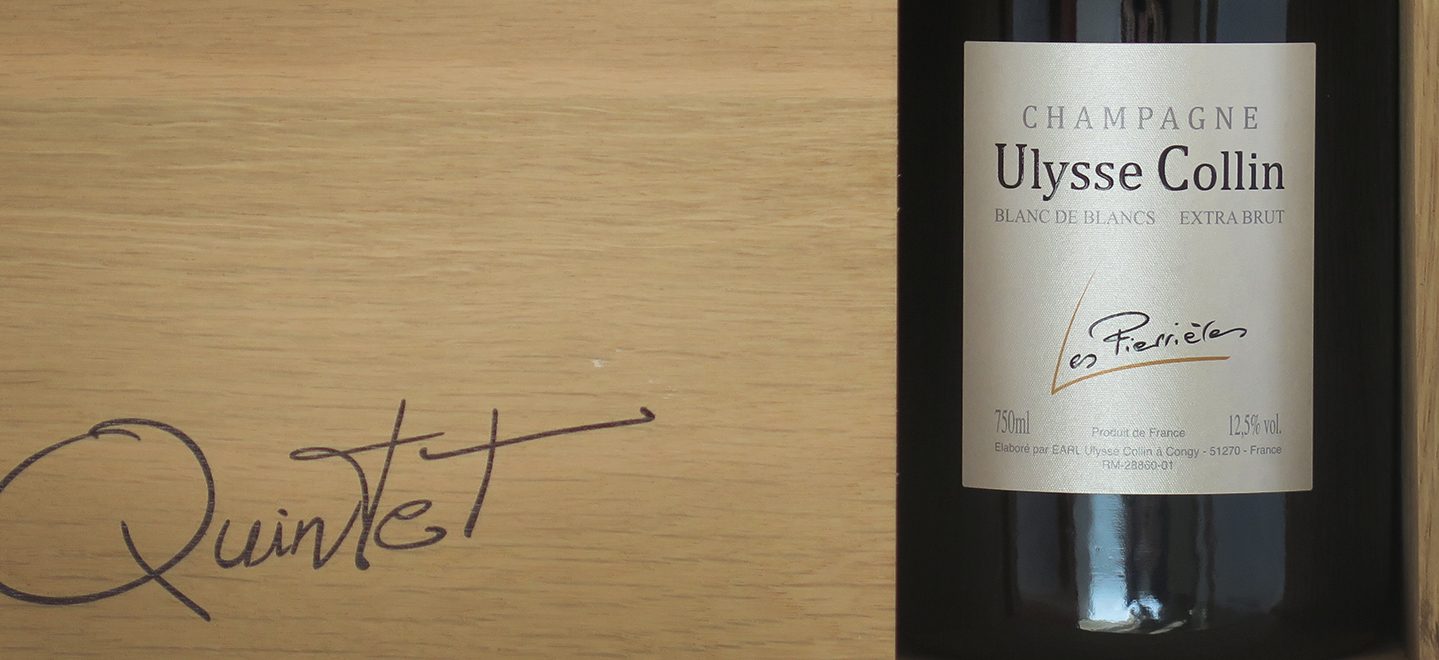 Region:
 -
Description:
Union Grove Distillery is a new “Farm Licensed” craft distillery located in Arkville, New York in the beautiful Catskill Mountains; the name comes from the lost town of Union Grove which once stood about 10 miles south of the distillery location and now lies beneath the cold waters of the Pepacton Reservoir. The Pepacton is one of many reservoirs in upstate New York that supply water to New York City.
The City has spent billions on building reservoirs and underground aqueducts to send clean, fresh water “untreated and unfiltered” to the millions of people in NYC, and Union Grove Distillery is fortunate to have at its disposal this same pristine water for their production.
Brian Mulder is the owner, distiller, bottler, bartender, masher and fermenter, marketer, distributer, website designer, parking lot snow remover, window washes, et al... in other words, wearer of many, many hats. He is very experienced, but new-comers to distilling and are hard at work melding high tech with old world at the distillery. Everything you see has been built by Brian, with a little help from some great friends.
For the new collaboration between David Bowler and Brian Mulder and Todd Pascarella, Kaatskill Mountain Spirits Co., click here.
Image: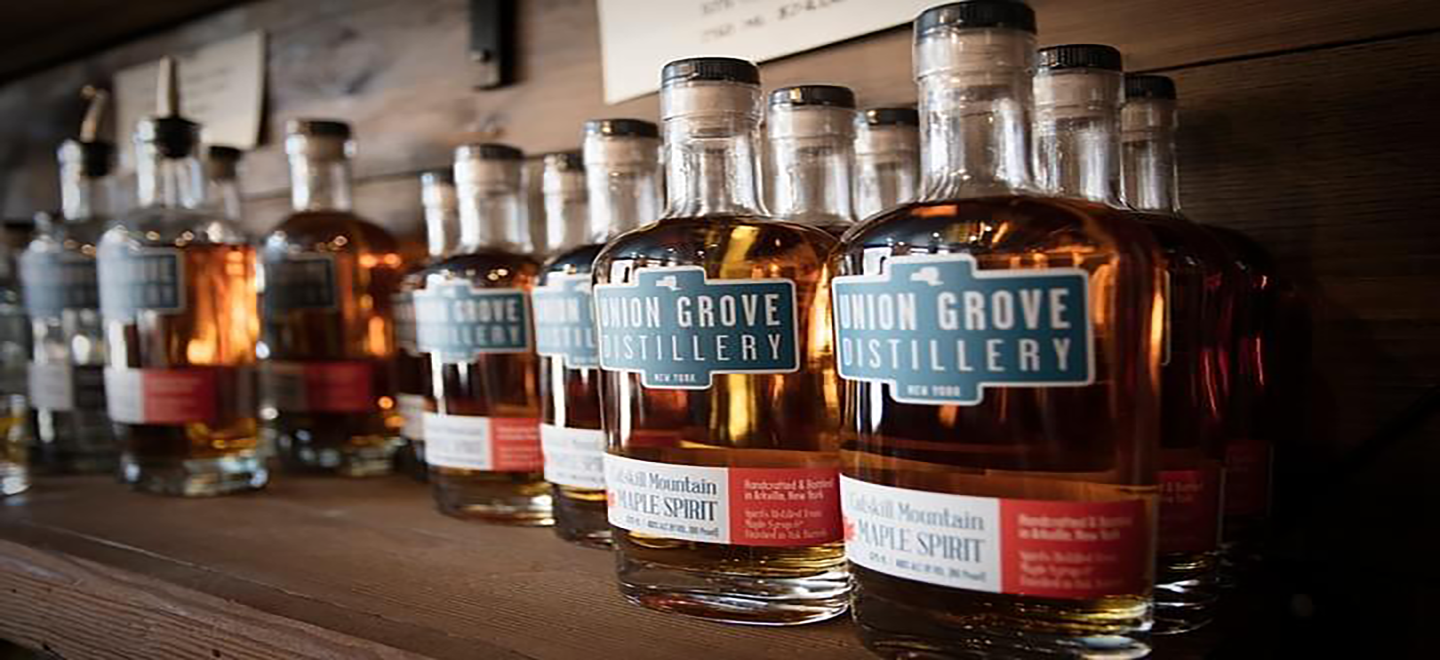 Region:
 -
Description:
Val de Mer is Patrick Piuze’s second winery, co-owned with Moutard-Diligent. The winemaking is very similar to his own, eponymous line: both are hand-harvested, both are spontaneously fermented, and the élèvage is the same (used barrels for 1er Cru and Grand Cru and tanks on entry-level.)
However, there are distinct differences. The fruit for the Val de Mer wines does not come from the same vineyards. They are produced in a separate winery- Val de Mer is in Tonnerre- and is an above-ground cellar, so the wines take the temperature of the season during aging. Lastly, you could say that Val de Mer is a more traditional Chablis winery in the way that the wines are bottled, favoring broader representations of the vineyards. For Val de Mer, the entry level Villages wine is a blend, compared to Piuze where his Villages Chablis are bottled separately by village; and, where Piuze has a Vaillon 1er Cru “les Minots”- les Minots being the specific parcel- Val de Mer simply has a Vaillons 1er Cru.
Image: Region:
 -
Description:
Frédéric Leydet runs the Château Leydet-Valentin and Château de Valois, both his family’s estates. The wineries are less than three miles from each other and they are in a top growing area of Saint-Emilion and Pomerol. They are very near to Cheval Blanc, Figeac, and Angelus. The soil is composed of sand, fine gravel, and iron. Like Cheval Blanc, Valois and Leydet-Valentin also have a high percentage (nearly 25%) of Cabernet Franc planted to best express the terroir of this area.
Each winery was passed down through the generations, but it was Frédéric’s father, Bernard Leydet who started bottling from only a few hectares of vines in 1962. Over the years, he gradually purchased more vineyards and at the time of his death in 2006, they had each grown substantially: nine hectares in Saint-Emilion and eight and a half hectares in Pomerol. Leydet was born and raised at the property and after studying vine growing and oenology, he came to work at the estate in 1996. Since he began he has introduced new practices, such as pruning and green harvesting. In 2012, he began the conversion to certified organic viticulture, receiving the certification for the 2015 vintage.
In the winery, fermentations happen naturally in tank. The wines are aged on the lees in oak barrels without any racking, a strict minimum of sulfur and no fining or filtration. The hands off approach in the cellar gives wines that feel like an ultra-tradional Bordeaux. The wines have a nice amount of fruit and earthiness, backed by structure, and tannins that are present but do not overpower.
BOWLER E-Zine Issue 2 | Q1 2021: Grower Bordeaux with Frédéric Leydet of Château Valois - Pomerol, France
Image: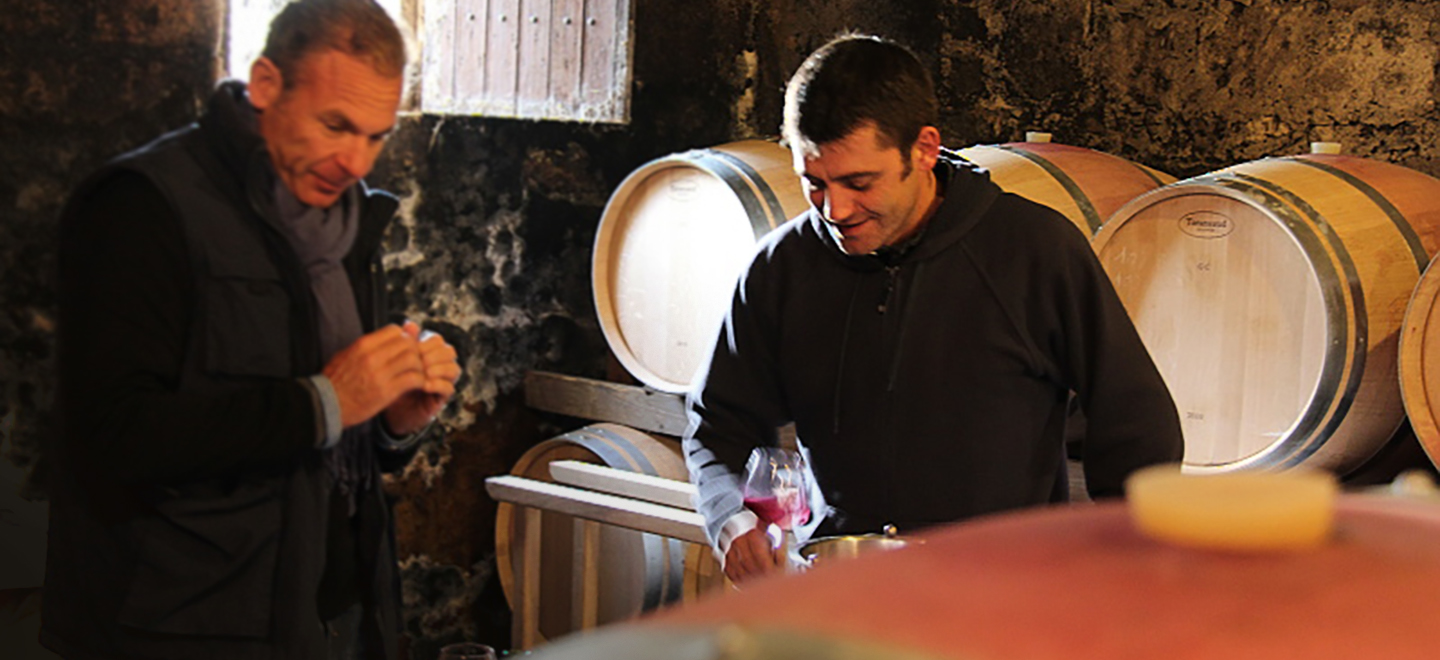 Region:
 -
Description:
Thank you to importer Louis/Dressner selections for this profile of Mauro Vergano:
After earning a degree in chemistry, Mauro Vergano studied oenology and viticulture at one of Italy's top schools. Soon after, he started working in the “flavors and fragrances” sector of a company full-time as a chemist. In his 15 years there, Mauro spent extensive time mastering the equipment that produce fragrances, all the while training his nose to correctly identify aromatic blends.
In the late 70's, Mauro channelled his combined interest in wine and aromatized fragrances by producing small batches of his own Chinato. For years it remained a hobby, but with the encouragement of his friends and family, the idea of turning his passion into a full time job started to grow on him. Three years after retiring, the first bottles of Chinato were ready for sale.
Pushing things forward, Mauro released the Luli in 2003, a Moscato based Chinato that remains the only one of its kind on the market. Next was the Americano, a twist on traditional vermouth; by using the relatively unknown grape Grignolino as the base wine, Mauro has created a light, untannic and aromatic delight. The most recent addition to the lineup is a Vermouth made in a more classic, Piedmontese style.
Mauro uses only the finest ingredients, and his cupboard is full of herbs and spices sourced locally but also from around the world. The same is true for the sourced wines: the Chinato is produced from Giuseppe Cortese's Nebbiolo, the Luli from Vittorio Bera & Figli's Moscato, the Americano from Cascina Tavijn's Grigolino and the Vermouth from Cascina Degli Ulivi's Cortese and the Bera's Moscato.Image: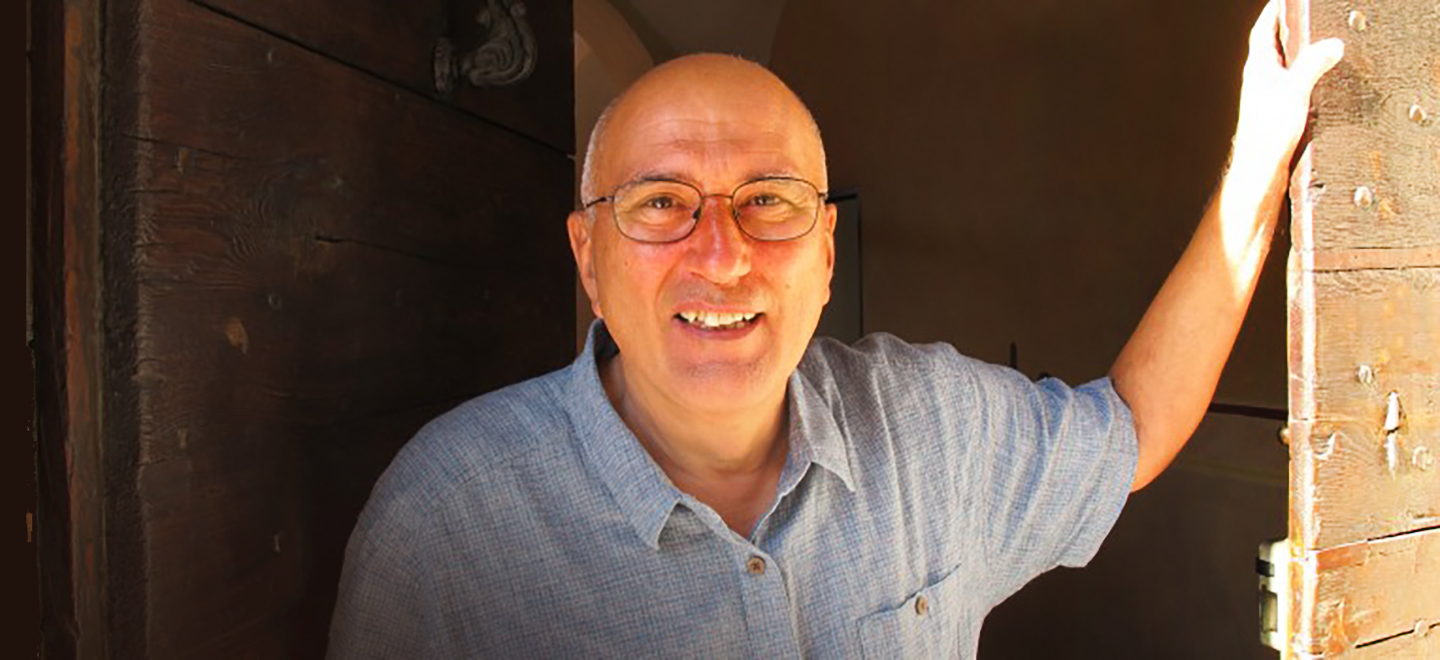 Region:
 -
Description:
Victoria Torres Pecis is now the sole owner and caretaker of her family’s centenarian winery in La Palma, Canary Islands. La Palma is in the northern part of the archipelago, further west into the Atlantic from the African continent. Like the other islands that form the archipelago, the soils are volcanic, the terrain rugged and uneven, and climactic conditions are extreme. Temperatures soar to volcanic heights, and the vineyards are constantly whipped by Atlantic winds.
Since her father’s death in 2015, Vicky has been working alone against the elements and the picón—the dark ashy sand that covers the soil—where most of her vines are grown. “I am like the Listán Blanco”, she says, “very resistant.” She has to be. Much of her work is that of restoration: first finding available vineyards and convincing growers to let her work their vines, and then rescuing dying plants and improving the general health of the plots. She farms organically, and the work is all manual.
Her quest for purity takes her from the vineyards she owns in Llanos Negros (a plot in the southwest side of the island planted with Malvasía Aromática, Sabro, and a bit of Negramoll) all the way to the northern side of the Island, in Tinizara, where the landscape changes radically with lush vegetation and incredible vistas above the sea of clouds. Here she works vineyards at more than 1300m elevation, planted with Negramoll, a variety she has mastered. Another site, a bleak-looking old vineyard planted on picón called “Las Machuqueras” on the southern slopes of the San Antonio volcano, gives her Negramoll, Diego (aka Bujariego aka Vijariego Blanco), and Listán Blanco. This plot has been with the family for generations, and due to her work it is (unofficially) recognized as the Islands most prized lieu-dit. In total she works 4.7 hectares.
Her bodega is in Fuencaliente, on the southern tip of the La Palma. It was there that she first learned her craft by watching her father use an old lagar to press grapes and vinify his wines in chestnut barrels. Not much has changed since the early days: the winery is small and contains a few stainless steel tanks and old French and American oak, as well as the chestnut barrels which are still in use. All fermentation is done with native yeasts, and temperatures are not controlled. Her wines have a stunning purity and vibrancy, achieved through her patient, meticulous work.
Image: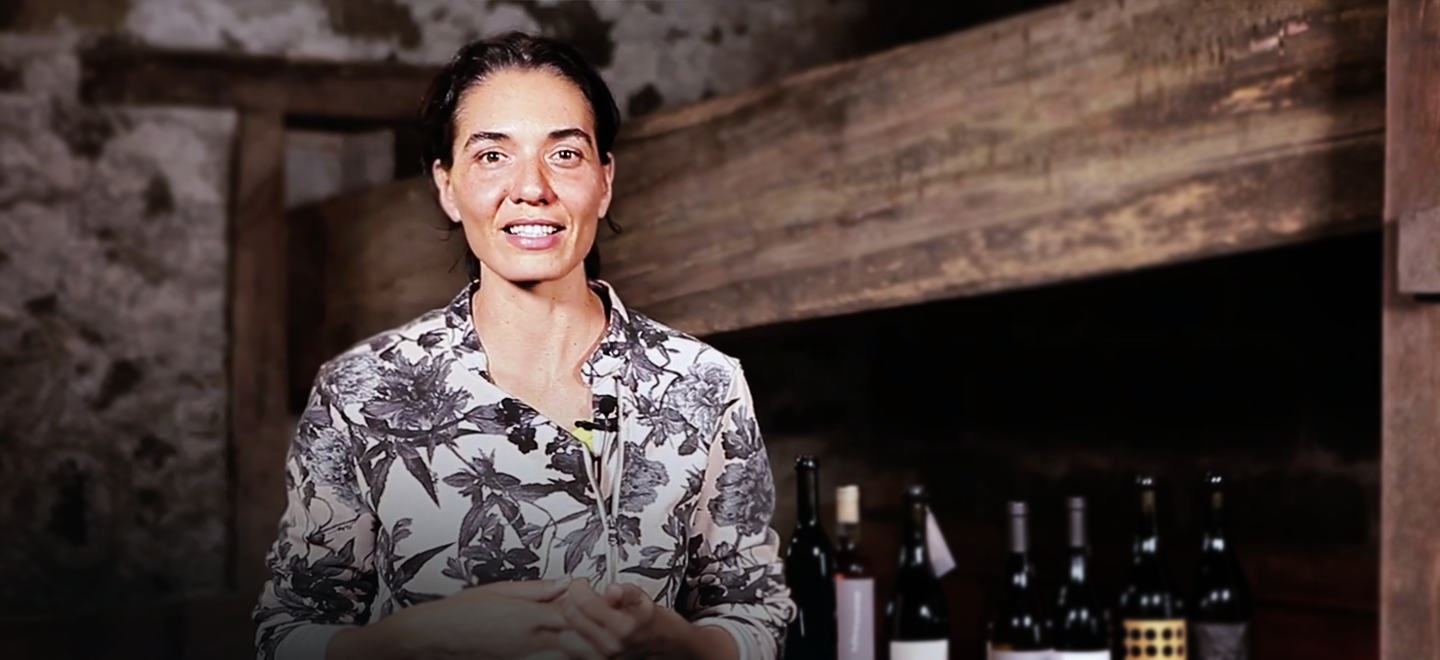 Region:
 -
Description:
Villa Calicantus is located in Calmasino, a tiny village on the eastern banks of Lake Garda, Italy’s largest lake. Owner and winemaker Daniele Delaini’s first vintage was 2011, though his family’s history here, in the Bardolino Classico zone, goes way back. In 1860, his great-grandfather established the winery, with the cellar in nearby Lazise. In 1920, his grandfather inherited it and built the cellar in its current location in Calmasino in 1923. Over the years, the family became one of the largest producers of Bardolino, but with the death of Daniele’s grandfather in the early 1970s, his family’s relationship with winegrowing and winemaking came to a halt. They lived in the “big city” of Verona, only coming to Calmasino in the occasional summer, and so the villa eventually fell into a state of abandonment.
After a stint in banking and “attempting” to sell Italian wine in Paris, Daniele returned to his native land when he inherited Villa Calicantus from an aunt. Her favorite flower was the calicantus (latin name: chimonathus), a flowering tree that blooms between December and February. Daniele started with one hectare of vines around the villa, and while the villa and its cellar were being repaired, he made wine in a nearby garage. His family was one of the largest growers of Bardolino in the past; in 2011 he became one of its smallest. Today he farms eight hectares of vines.
The nearly forty-year gap in his family’s involvement in Bardolino proved to be crucial to Daniele’s philosophy. They entirely missed the area’s “industrial/ chemical conversion.” They skipped the appellation’s unfortunate descent from a historic zone producing soulful, light-to-medium-bodied (but often long-lived wines), to a place making mass-produced innocuous quaffers for lake tourists looking to spend as little as possible on a bottle. Daniele remembers barrels, not only in his grandfather’s cellar, but also all over the appellation. He remembers Bardolino as a wine more worthy of one’s heart and intellect—different than nearby Valpolicella’s more mountainous, calcareous/ volcanic profile and use of appassimento, but no less expressive of place: a softer, prettier wine from of lower altitudes, morainic soils, and a climate kept moderate by Lake Garda.
Today, he farms eight hectares on some of the highest sites in the appellation. Five of the eight hectares are trained in pergola, with many of them planted in 1966. He has farmed organically since day one, and in 2014 began conversion to biodynamics. He’s considering getting Demeter certification. His yields are 1/2 to 1/3rd the allowed limit for Bardolino, and he ages his wines longer than anyone in the appellation.
He restored the abandoned villa, where he now lives with his wife, Chiara, and their young children. For a couple years they also ran a bed and breakfast there, but it was too much to keep up with simultaneously with the winemaking. The old cellar has also been restored and Daniele has filled its minuscule space with concrete vats and used barrels. He makes five different wines—30,000 to 40,000 bottles total—up considerably since 2011, but still one of the tiniest operations in the area. Daniele’s mission has been to find a path forward by returning to Bardolino’s past. We are excited to represent this special winery.
Villa Calicantus is a member of Co.Vi.Bio (Consorzio dei Vignaioli Biodinamici), a group of seven like-minded biodynamic Italian growers who pool their resources, often presenting their wines together and helping each other with logistics. Learn more at www.covibio.com.
You can also visit Daniele’s website at http://www.villacalicantus.it.
Image: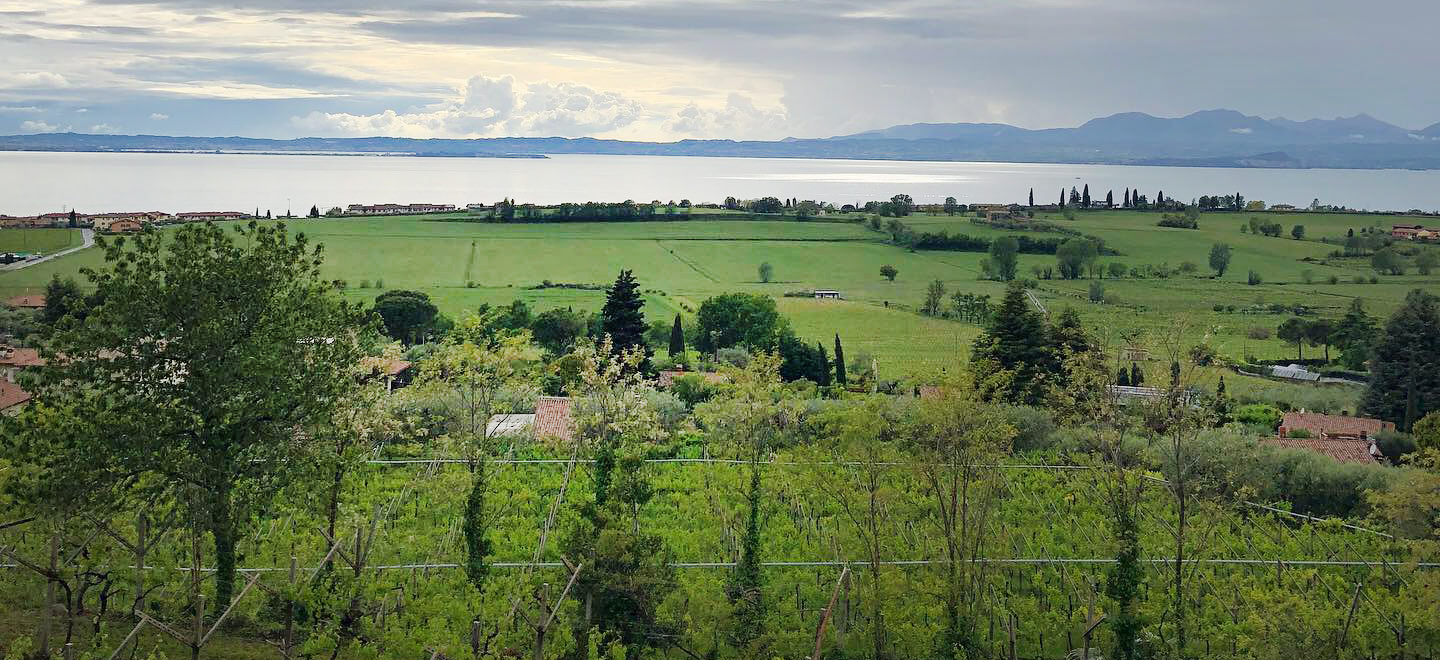 Region:
 -
Description:
Francois Villard was not born into wine; he started out his career as a chef. He grew up between Vienne and Grenoble, in the French countryside. He made his first Condrieu in 1991, a whopping 400 bottles. Today, makes wine from 64 hectares, of which he owns 40 hectares, purchasing fruit from the balance. He makes wine from Côte-Rôtie down to Saint Peray, and a little of everything between: four Condrieu, five Saint-Joseph (red and white), three Crozes-Hermitage, a Cornas, and four Vin de France (Marsanne-Roussanne, Viognier, and two Syrah).
Villard farms sustainably and hopes to be certified organic by 2022. He works his soils and uses organic fertilizers and organic treatments for disease as needed. He’s working with spontaneous fermentations and he’s begun experiments with making wine with very minimal sulfur during vinification and it’s gone well, so he’ll expand on that in the coming years. He has no intention of eliminating sulfur altogether and plans to continue to use a minimum amount of sulfur at bottling. He filters the wines if he needs too, but tries to avoid it.
In terms of style, Villard tends to harvest later than his neighbors, optimizing ripeness. He uses whole clusters during vinification as the stems give freshness to the wine. For his Condrieu, he likes to work with botrytis if possible, but he will only wait if the potential alcohol does not get too high, balance being the key. Villard never chaptalizes his whites (and very rarely the reds) and will make several passes in the vineyards to wait for the fruit to ripen. He’s using barrels and foudres for aging, some new depending on the cuvée. The whites are bounding with succulent fruit, a rich texture, and have a deft balance. The reds strike a nice harmony between red fruit notes and spicy earth, classic Northern Rhône. —Michele Peters, French Portfolio Manager
Image: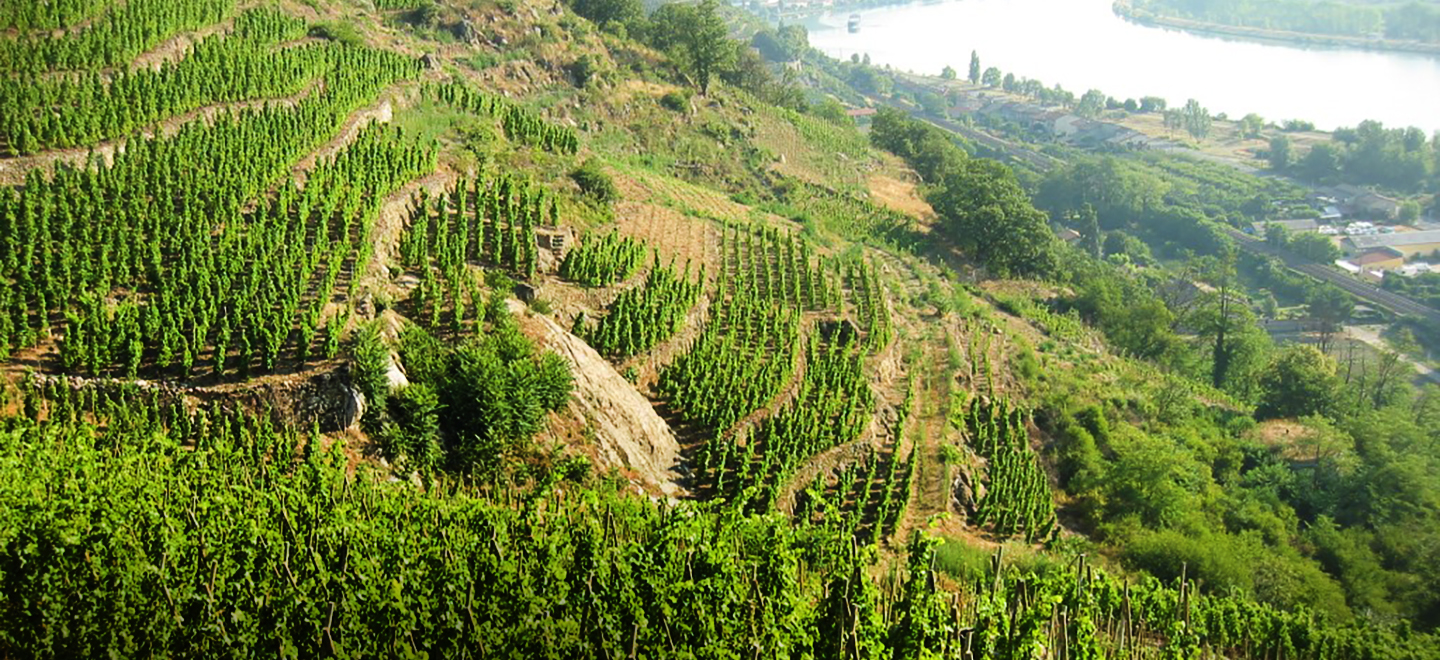 Region: