Producers
-
Description:
Founded by Gary and Nancy Figgins, in 1977 Leonetti Cellar (named for Gary’s grandparents) became the first bonded winery in Walla Walla. Almost immediately their exceptional wines set the standard for Washington and over the past three decades they have vigorously worked to maintain that excellence.
Using only estate fruit they produce four wines: Merlot, Sangiovese, Cabernet Sauvignon, and a Reserve blend. The wines are bold and expressive but also balanced and structured. Although delicious on release, the wines age beautifully. All of the wines are aged in a mix of old and new French oak for 15-22 months and total production is around 5500 cases.
In 2001 Chris Figgins assumed the role of head winemaker and, following Gary’s retirement in 2011, now runs the entire estate. He won’t be changing things, however, Leonetti remains strongly rooted in family tradition and the goal hasn’t changed in all these years, simply to produce the greatest wines they possibly can.
"Leonetti Cellar is unquestionably Washington state's finest Cabernet Sauvignon producer."
—Robert Parker, Wine Advocate
Image: Region:
 -
Description:
For more information on Les Capriades, please visit Selection Massale.
Available in California.
Image: Region:
 -
Description:
From Selection Massale: “We were farmers before we were vignerons” Pierre-Andre and Anne Deplaude like to say with no small measure of pride. It’s often said that wines are made in the vineyard, not in the winery. This is of course a simplification but we’ve always liked working with those vignerons with big callused hands from the field, so imagine how happy when we stumbled on wines being made by people in love with the idea of polyculture; that wine was just a part of their farm.
When Pierre-Andre and Anne started to farm in the out of the way Coteaux-Du-Gier somewhere between Lyon and Clermont-Ferrand, wine wasn’t a priority - instead it was grains, fruits and dairy cows, as well as a tiny production of wines. This kept going until the early 2000s when a drop in milk prices forced them to rethink a few things, and they decided to take some of their most interesting land and convert it to vineyards. The rest, as they say, is history. And the wines are some of our favorites to this day.
Image: Region:
 -
Description:
For more information on Domaine Les Serrals, please visit Selection Massale.
Available in California.
Image: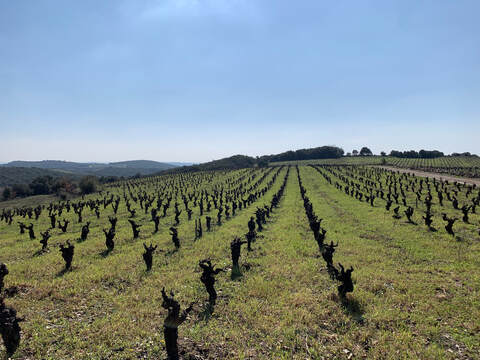 Region:
 -
Description:
Frédéric Leydet runs the Château Leydet-Valentin and Château de Valois, both his family’s estates. The wineries are less than three miles from each other and they are in a top growing area of Saint-Emilion and Pomerol. They are very near to Cheval Blanc, Figeac, and Angelus. The soil is composed of sand, fine gravel, and iron. Like Cheval Blanc, Valois and Leydet-Valentin also have a high percentage (nearly 25%) of Cabernet Franc planted to best express the terroir of this area.
Each winery was passed down through the generations, but it was Frédéric’s father, Bernard Leydet who started bottling from only a few hectares of vines in 1962. Over the years, he gradually purchased more vineyards and at the time of his death in 2006, they had each grown substantially: nine hectares in Saint-Emilion and eight and a half hectares in Pomerol. Leydet was born and raised at the property and after studying vine growing and oenology, he came to work at the estate in 1996. Since he began he has introduced new practices, such as pruning and green harvesting. In 2012, he began the conversion to certified organic viticulture, receiving the certification for the 2015 vintage.
In the winery, fermentations happen naturally in tank. The wines are aged on the lees in oak barrels without any racking, a strict minimum of sulfur and no fining or filtration. The hands off approach in the cellar gives wines that feel like an ultra-tradional Bordeaux. The wines have a nice amount of fruit and earthiness, backed by structure, and tannins that are present but do not overpower.
BOWLER E-Zine Issue 2 | Q1 2021: Grower Bordeaux with Frédéric Leydet of Château Valois - Pomerol, France
Image: Region:
 -
Description:
Surales is a small hamlet in southern Ecuador, situated at approximately 4,000ft in the mountains between Guayaquil and Cuenca. The climate is generally temperate at these altitudes, with warm, mostly overcast summers and short, dry, and cold winters. Remigio Cordero began his long career in the art of distillation at the age of 14. Now in his 80s, he is joined by his grandson, Ismael Cordero, on the family’s organic estate. Caña Blanc is the name of the sugarcane variety farmed in this region, and this is what the family uses to make their Puro, the local name for unaged white rum. It is harvested by hand, crushed, fermented with native yeasts, and double distilled in a hand-built pot still. It is bottled at full proof.
Image: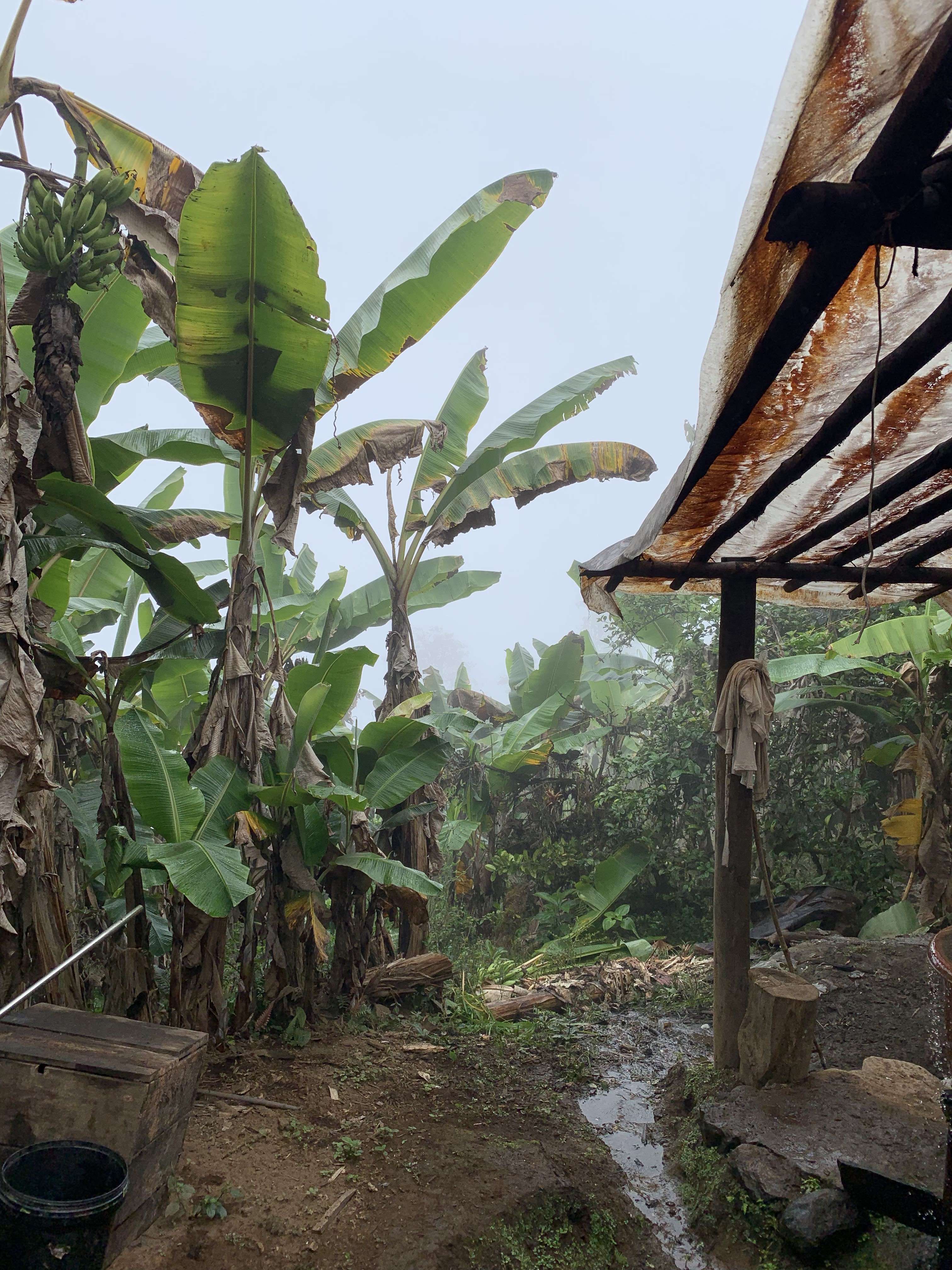 Region:
 -
Description:
Lilbert owns 3.5 hectare of vines- all Grand Cru, and all Chardonnay, with an average vine age of 45 years- in the Côte des Blancs. 60% of their vines are in Cramant, 30% in Chouilly and 10% in Oiry. These are three of the six Grand Cru villages in the Côte des Blancs. It is rare that any one house owns exclusively Grand Cru vineyards in the Côte des Blancs; Bertrand calls himself "very lucky" to be able to make wines from such prestigious vineyards. All of the parcels are vinified separately until two weeks before bottling. The NV represents 80% of the production and is aged in the cellar for two years. Dosage is normally around 7g/L, since Bertrand is going for acidity in his wines and not ripeness. (He does not perform batonnage because it makes the wines too heavy.) The winery is tiny and the latest investment is a 4,000kg pneumatic press and a disgorgement machine. Each bottle is still riddled by hand. The end result is a true connoisseurs champagne.
Image: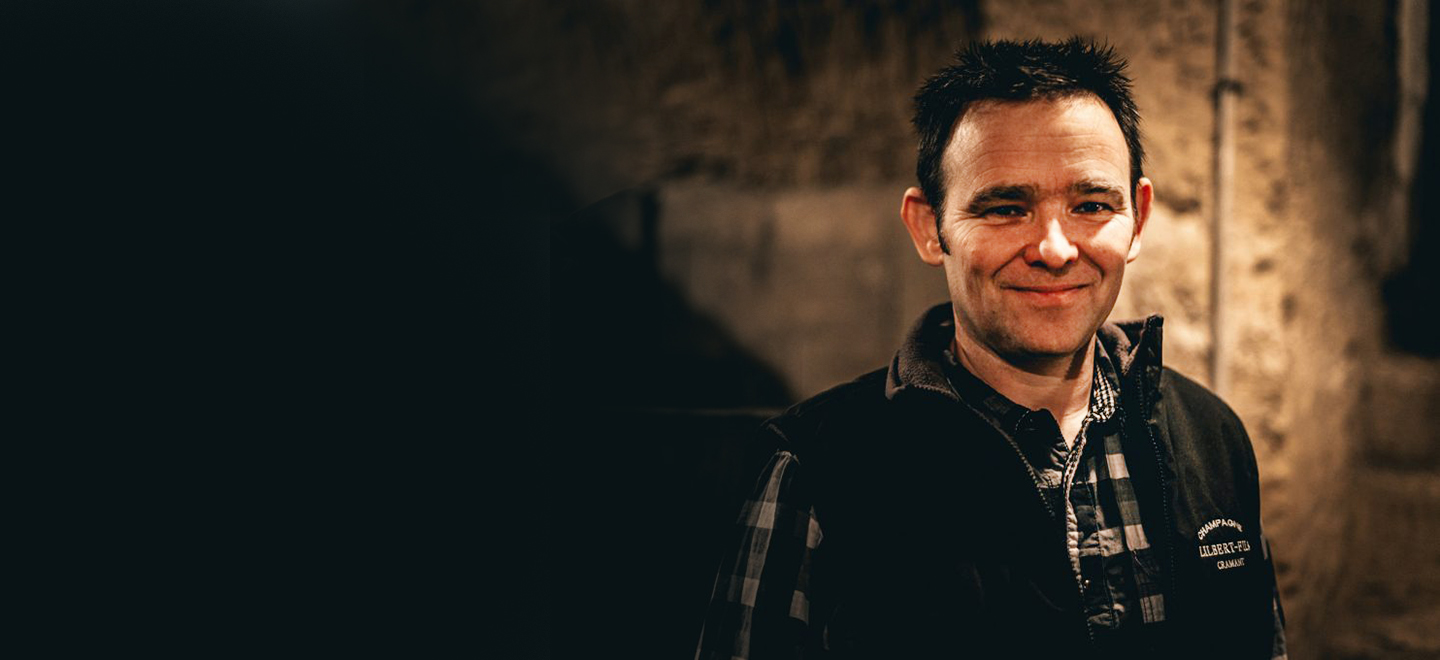 Region:
 -
Description:
Little City Vermouth was founded and is made by Will Clark. For the past 22 years Will has lived in Harlem, and has worked as a professional musician touring the world. While visiting Spain, Will experienced the traditional Vermut service (red vermouth, on ice with an orange slice & olive) and was hooked! Upon returning home to Harlem, Will got to work researching vermouth; its history, traditions, and most importantly, how to make it.
From there, Will began making his own vermouth in his Harlem apartment. He played with different methods of extraction and different blending processes. He researched the history of vermouth—which is arguably as old as wine itself—and tried to track down every botanical that had ever been used in vermouth. He learned that the possible flavor combinations are essentially endless. Eventually, Will’s project produced a vermouth that he preferred to any that were available to him in local stores.
With a good working knowledge of vermouth and a clear vision of what he wanted to make, Will sought out a winery partner to bring Little City to life. The search eventually led him to the Finger Lakes, and Hunt Country Vineyards, a seventh-generation farm just west of Keuka Lake.
The first bottling of Little City Vermouth was in July of 2018. The two styles (Sweet & Dry) are on a base of Cayuga, and Valvin Muscat grapes. Cayuga is a cross of Schuyler and Seyval Blanc grapes that was developed at Cornell University to create a grape that would grow well in the Finger Lakes region of New York State. The dry uses 37 botanicals. It is citrus-forward, bright, and energetic. The sweet vermouth is bold, rich and spicy. Reminiscent of a Torino style, made right here in New York. Little City’s latest offering is a vermouth spritz—a blend of sweet and dry vermouth topped with seltzer water and packed in a 12 ounce can. Light and easy drinking, it’s something Will has been serving to friends and family for years, now available to all.
Image: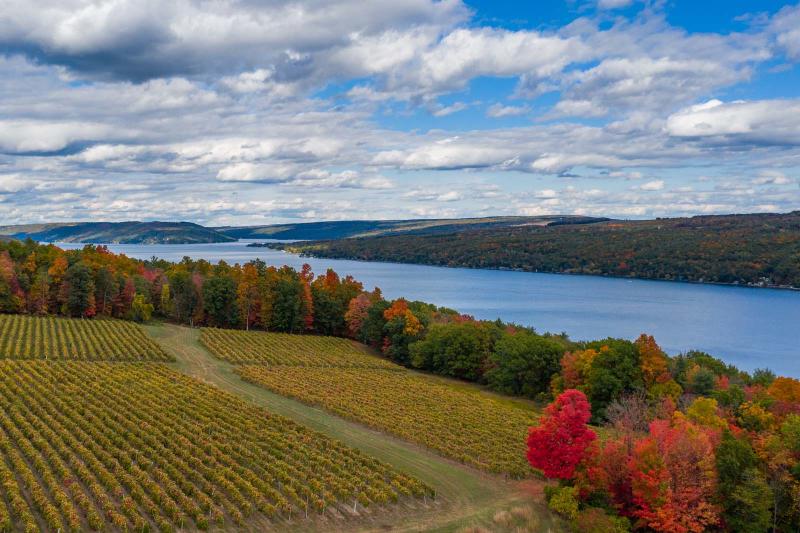 Region:
 -
Description:
Made at one of England’s foremost gin distilleries – the Langley distillery which can trace its roots back to 1785 – London hill dry gin is produced using the traditional pot still method. 43% abv a crisp gin London Hill’s bias towards subtle citrus tones comes from ribbons of citrus peel including lemon and sweet orange. This along with the other carefully selected botanicals gives a spicy fruit edge and delivers an exceptionally smooth and refined gin. The botanicals which include juniper berries citrus peels and coriander seeds are first macerated with neutral grain alcohol to extract their individual flavours and characteristics. No artificial flavours oils or essences are used in the making of London hill dry gin. All the ingredients are natural and sourced from the four corners of the world.
The distillery is situated in the historic Crosswells Brewery Site which dates back to the early 1800s and was built over an ancient underground water source. Gin has been distilled at Langley Distillery since 1920, continuous improvements to the site along with our long history and heritage in gin making has resulted in a facility which produces globally award-winning gins of the finest quality.
Our stills at Langley Distillery are some of the oldest working copper gin stills in the UK, some of them dating back to the early 1800s.
MACKAY- Dating back the 1860s this copper pot still is one of our oldest, made by Bennett Shears & Sons. The capacity is 200 litres of concentrate ANGELA- Made in 1903 by John Dore, the capacity of this still is 1,000 litres. CONSTANCE-Made in 1950 by John Dore, the capacity of this still is 3,000 litres. JENNY- Dating back to 1994, Jenny is Langley Distillery’s newest still. Built by McMillians, the capacity of this still is 12,000 litres.
The botanicals are carefully weighed out and added to the still, along with a charge of ethanol and water solution. The still lid is then shut and the steam jacket switched on to allow the gentle warming of the still. This warming process allows the botanicals to begin releasing their oils for distillation; this process of maceration continues over night.
The following morning, once the maceration has completed, we start heating the still again, this time to higher temperatures making the charge boil. The boiling process begins to turn the liquid into vapour which rises to the swan neck and water-cooled condenser, turning the vapour back into liquid. The distillation is separated out into three parts; heads, hearts and tails. It is only the heart section that we use in our gin-making process; this liquid holds the most subtle and refined of the aromas and flavours given off during the distillation. The concentrate produced is between 78%-82% ABV and cannot be used alone to make gin. We blend the concentrate with neutral alcohol, to create high strength gin that is reduced with water to bottling strength.
Image: Region:
 -
Description:
Lopez de Heredia - one of the most venerable producers in Spain– produces traditional, age-worthy Rioja. Their wines are legendary and still made the way they were when the winery was founded over 130 years ago. Following a tradition that has been passed down through generations, their wines are released at least 5-10 years after harvest, which provides added complexity and elegance to their Crianzas and Gran Reservas.
A rarity in Rioja, Lopez de Heredia uses only estate bottled fruit from their prized vineyards- Tondonia, Cubillo, Bosconia, and Zaconia- with the idea that the only way to get the best fruit is to care for the vines themselves. The Tondonia vineyard is their most famous; over 100 hectares, it is situated in a shell-shaped depression on the right bank of the river Ebro, where the most typical Rioja wines are grown. The soil is alluvial clay with a high proportion of limestone. Average vine age is 45 years old and organic farming and natural fermentations are implemented, creating wines that exhibit great terroir. Grapes from Viña Tondonia are always used in making their highest quality wines, with truly exceptional vintages becoming Gran Reservas. The first Reserva was bottled by the founder in 1890; a few bottles of this are still kept in the family wine museum.
The winery itself is a remarkable structure. When D. Rafael López de Heredia y Landeta began building the bodega in the late 1800's, little did he realise that his masterpiece would one day be acknowledged as an example to the rest of the industry of the most perfect combination of buildings and vineyards. Like many medieval masterpieces it is still incomplete. The buildings stand below and above ground, and are a veritable "cathedral to wine". Moving through the vaulted underground corridors and staircases, you find yourself travelling back in time, and the founder’s touch can still be sensed in the very stones and fabric of the building.
"I have adored, indeed occasionally worshiped, the wines of Lopez de Heredia for many years, so I am not ashamed to admit that visiting both their vineyard and their winery was a pilgrimage. Founded by Rafael Lopez de Heredia y Landeta in 1877, it has withstood the tide of corporatization and homogeneity, and epitomizes timeless, artisan winemaking in their own individual, almost solipsistic manner. Technology is noticeable by its absence here. For example, to quote her sister Maria-Jose at a tasting that I subsequently attended in London: “Indigenous yeasts have adapted to high temperatures. To control the temperature during fermentation, we open doors and windows” and “malolactic is the invention of modern winemakers.” I had to check whether this was 2012 or 1912. If you were to award points for charisma, then this producer would be in a league of its own. That would count for nothing if their wines were not distinguished, individual, long-lived and above all, delicious. It is commonly known that if you are seeking bags of fruit and lashings of oak, this is not the place to come. My views and these scores might be irrational to someone with a penchant for lush, voluptuous Rioja. Lopez de Heredia is the apotheosis of traditional, classic wines: taut, fresh, bucolic, utterly charming and amazingly long-lived. I spent two or three hours with winemaker Mercedes Lopez de Heredia, who was celebrating her birthday with, appropriately enough, a bottle of Tondonia Gran Reserva from her year of birth. I urge readers to access the video I took of Mercedes explaining the vineyard in her own breathless style. In the meantime, I will crack on with the wines. 'Wines should talk by themselves,' Maria-Jose enthused to her enraptured audience at a tasting in London. 'My father was a vine maker, not a winemaker. Each wine is a reflection of a different land that my great-grandfather bought. Our wines respond to the history of Rioja.' I would add to her comments that since these are mainly aged wines, a bottle of Lopez de Heredia is an individual and each time you meet, you may see a different side to its personality. So treat these reviews as they are: snapshots at a given moment. We commence with their white wines and indeed, I know of several connoisseurs who rate these even better than their reds and I can sympathize with that view. " -Neal Martin, The Wine Advocate, August 2012
www.lopezdeheredia.com
The following is a list of their vineyards, NOT the wines themselves; please inquire for availability.Image: Region: