Producers
-
Description:
‘A Vita (meaning "The Vine" in local dialect) is a 7-hectare certified organic estate in Cirò, Calabria, run by husband and wife team Francesco de Franco (native to Calabria) and Laura Violino (native to Friuli). Cirò is located on the arch of Italy’s boot tip, nestled between the Ionian sea and Sila mountains; this situation ensures both coastal influence and dramatic diurnal shifts. This is a remote, underdeveloped part of Italy. Though the local grape varieties were selected over millennia for their suitability in this arid climate, one hopes for some water reserves from winter rains. The vineyards are certified organic, and no fertilizer is used. Instead they plant cover crops, and are careful to not work the soil much, so as to favor natural biodiversity and increase water retention. Yields are automatically low, 25-40 ha/hl; naturally, no green harvest is necessary. In the cellar, there is zero technological input: the wines are fermented spontaneously without temperature control, decanted naturally, and are never rushed. Sometimes a wide filtration is used and a small amount of sulfur is used at bottling. The wines are often aged in bottle for an extended time before release.
Cirò wine can be traced back to antiquity, when it was allegedly served to the winners at the ancient Olympics, but only the truly dedicated have committed to recapturing its ancient glory. When Francesco and Laura released their first vintage in 2008, there were only 15 producers of Cirò DOC. Dominating the denomination then and now is one producer, Librandi, who produces over 200,000 cases per year. By contrast, Francesco & Laura make only 2000 cases total in a productive year. 'A Vita was a catalyst in a movement now known as "Cirò Revolution," which encouraged grape growers to stop selling their fruit to the co-ops or Librandi. Today the Cirò appellation boasts 60 producers. As one of the first independent producers to emerge on the new Cirò scene, and after nearly twenty years of observation and adaptation, we can proudly represent 'A Vita as a modern-day benchmark.
To view their website click here.
For a nicely produced video (in Italian) click here.
Image: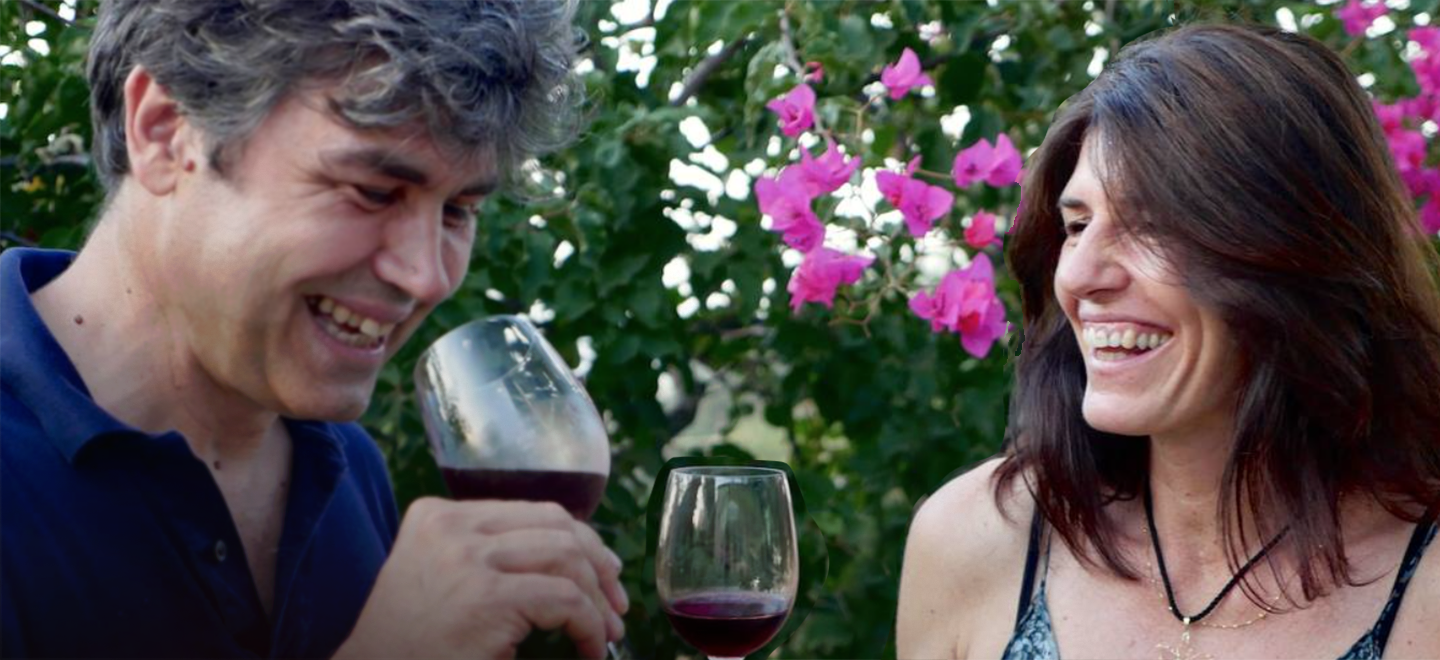 Region:
 -
Description:
The Origin of 4 Copas
4 Copas was founded in 1997 by Hector Galindo Miranda—known simply as “Don Hector” in the industry—driven by a vision to craft a tequila that honored tradition while embracing purity. His pioneering efforts led 4 Copas to become the world’s first certified organic tequila, setting a new standard in the spirits world. To bring this vision to life, Hector collaborated with legendary Master Distiller Sebastián Melendrez of Tequila, Jalisco. Together, they blended science and nature to create a spirit of exceptional quality, made exclusively from 100% organic agave, water from the lowlands, and organic yeast. Today, 4 Copas is proudly owned by generational agave growers from Arandas, Jalisco—a family deeply rooted in the tequila tradition. Their heritage and hands-on approach ensure that every bottle of 4 Copas stays true to its origins while continuing to represent the finest in organic tequila. Continuing the legacy of excellence, 4 Copas is now crafted under the guidance of Iliana Partida, one of the most highly regarded female Master Distillers in the industry. Production takes place at Hacienda De Oro, a distillery known for its artisanal methods and commitment to quality—faithfully continuing the brand’s legacy of being produced in the lowlands of Jalisco, near the Tequila Volcano. 4 Copas remains certified organic by the USDA and EU, and is also certified Kosher under Rabbinical law.
The Organic Difference
Every bottle of 4 Copas begins with carefully selected seeds from certified organic agave fields located near the Tequila Volcano in the famed region of Amatitán, in the lowlands of Jalisco. This volcanic region is rich in minerals like silica, potassium, iron, and copper—all essential for healthy agave growth and integral to the tequila’s complex flavor profile. The unique combination of volcanic soil, warm climate, and high elevation creates a natural micro-terroir, a distinct environment that deeply influences the agave’s development, imparting nuanced aromas and layered taste. Grown without synthetic chemicals, the agave is cultivated using only organic fertilizers and cared for by hand through every stage—from planting to harvest. Shoots are hand-selected for propagation, ensuring only the strongest, healthiest plants are used. This time-intensive, artisanal approach preserves the land and enhances the spirit’s authenticity. What truly sets 4 Copas apart is its natural fermentation process, developed through a proprietary method that draws out the full character of the agave. The result is a tequila with exceptional purity, depth, and elegance—an organic expression of place and process that leaves a lasting impression with every sip.
Image: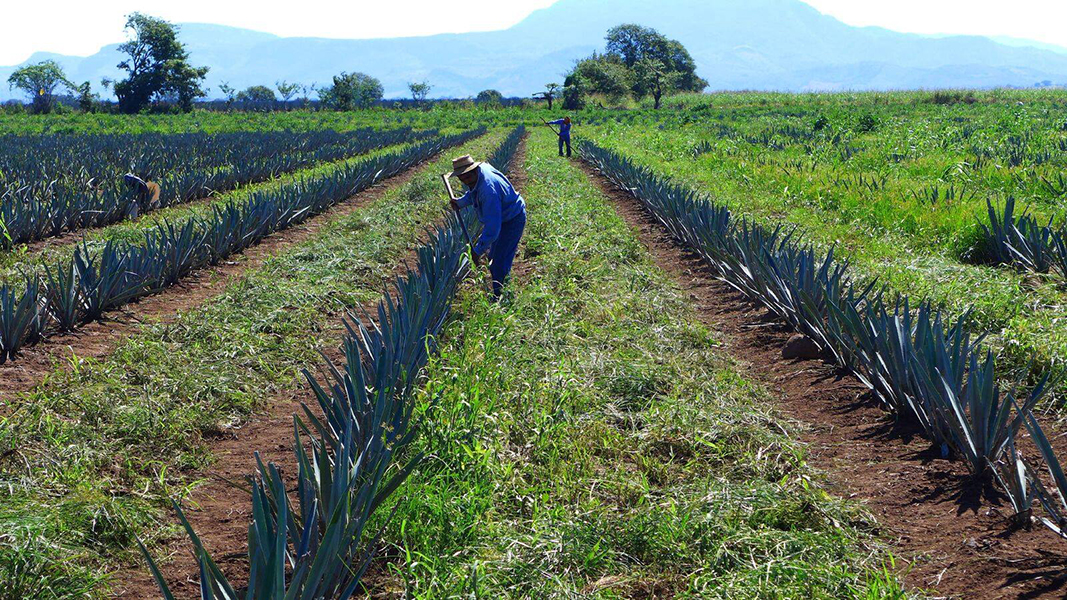 Region:
 -
Description:
45th Parallel is a small, family-owned craft distillery in New Richmond, Wisconsin. When they opened their doors in 2007, they were one of 50 craft distilleries in the United States; there are now more than 1,000. They have seen consistent growth over the years, doubling in both physical size and production capacity, and have gone from making a single vodka to producing gins, whiskeys, aquavits, and citrus liqueurs as well. Their name comes from the fact that they are located on the 45th parallel, halfway between the equator and the north pole.
They take no short cuts. They use only locally-grown grain, and distill their whiskeys in a pot still; afterwards, they use traditional aging techniques in Ozark white oak barrels with medium char, constructed from wood staves that are air dried three years. The whiskeys are aged a minimum of 4 years.
Image: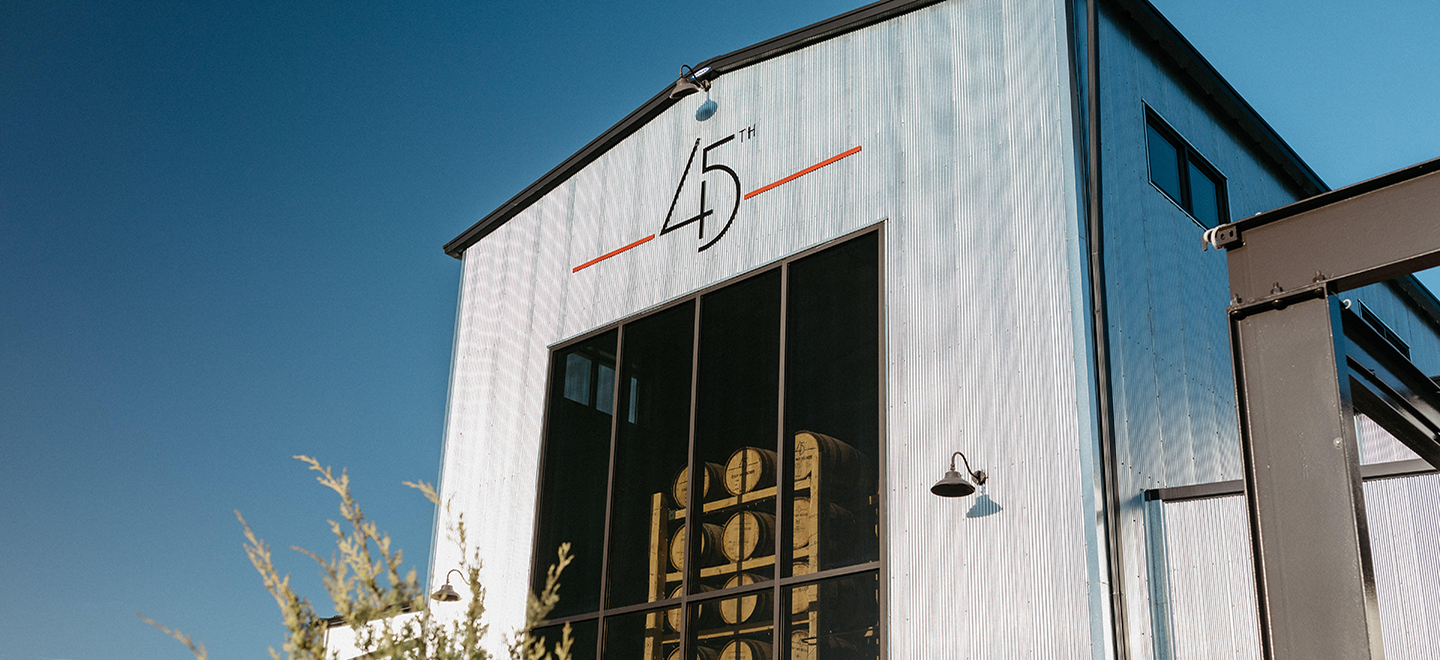 Region:
 -
Description:
Thank you to Louis/Dressner for this profile of Eduardo Torres Acosta:
(Click here for LDM's Acosta notes on their website)
Eduardo Torres Acosta, a young winemaker from the Canary Islands, first began working with vines in Tenerife where his father (a local postman) had a small plot of land. In 2012 Eduardo moved to Sicily, where he interned at Azienda Arianna Occhipinti (you may have heard of her). Soon thereafter he got a job as the enologist at Azienda Passopisciaro, one of the pioneers of Etna's new wave of producers. Despite Eduardo’s "outsider" status, he managed to rent several fine parcels on Etna from locals. Up until the 2017 vintage, the grapes were harvested and then trucked to Arianna Occhipinti’s estate in Vittoria. Since the winemaking facility was not on Etna, the wines were not allowed DOC status and simply carry the IGT Terre Siciliane designation. In 2018, Eduardo was able to convert a small Etna garage into a winery but has decided to keep the wines IGT.
Today Eduardo works eight small parcels totaling 4.5 hectares. The main production is a wine called Versante Nord, produced in both white and red. Both wines are sourced from six parcels totalling less than two hectares on the cooler, north-facing side of Mt. Etna (hence the name) at elevations ranging from 750 to 950 meters. In traditional style, the vineyards are mixed plantings of various local varieties. The red grapes include a majority of Nerello Mascalese with Nerello Cappuccio, Alicante, Garnacha and others; the whites include Minella, Catarratto, Grecanico, Carricante and Inzolia. The training is mainly alberello, in some cases growing as bushes and in some trained on wires.
Two single vineyards are produced, Pirrera and Quota N, the latter from a vineyard called Germana. Pirrera comes from a single contrada located at 850 meters in altitude. The name of the vineyard, Pirrera, stems from the presence of volcanic stones which were extracted from a quarry during a lava flow in 1614. The vineyard had been largely abandoned and is slowly being restored by Eduardo. Lighter and fresher than the Versante Nord due to the higher altitude, this is a blend of 90% Nerello Mascalese and 10% local varieties from vines of 50 plus years.
Quota N was first bottled in the 2018 vintage. Eduardo acquired this flat, half-hectare, west-exposed parcel of ungrafted (hence piedi franco on label), 80-100-year-old, co-planted bush vines. It is surrounded by stone walls on very rocky, sandy volcanic soils at the high elevation of 1070 meters in the contrada. The parcel is named Germana for its historical family owner, but Eduardo was not allowed to use this and was also not premitted to use the Nave contrada name because the site is too high to fall within DOC Etna Rosso rules. The local road is called strada quota nave and from this phrase, Eduardo pulled the "Quota N" name for the wine. The production is unavoidably miniscule, smaller even than the parcel size would suggest, due to the naturally low yields of these old-timers as well as to holes where they have died or stopped producing.
Image: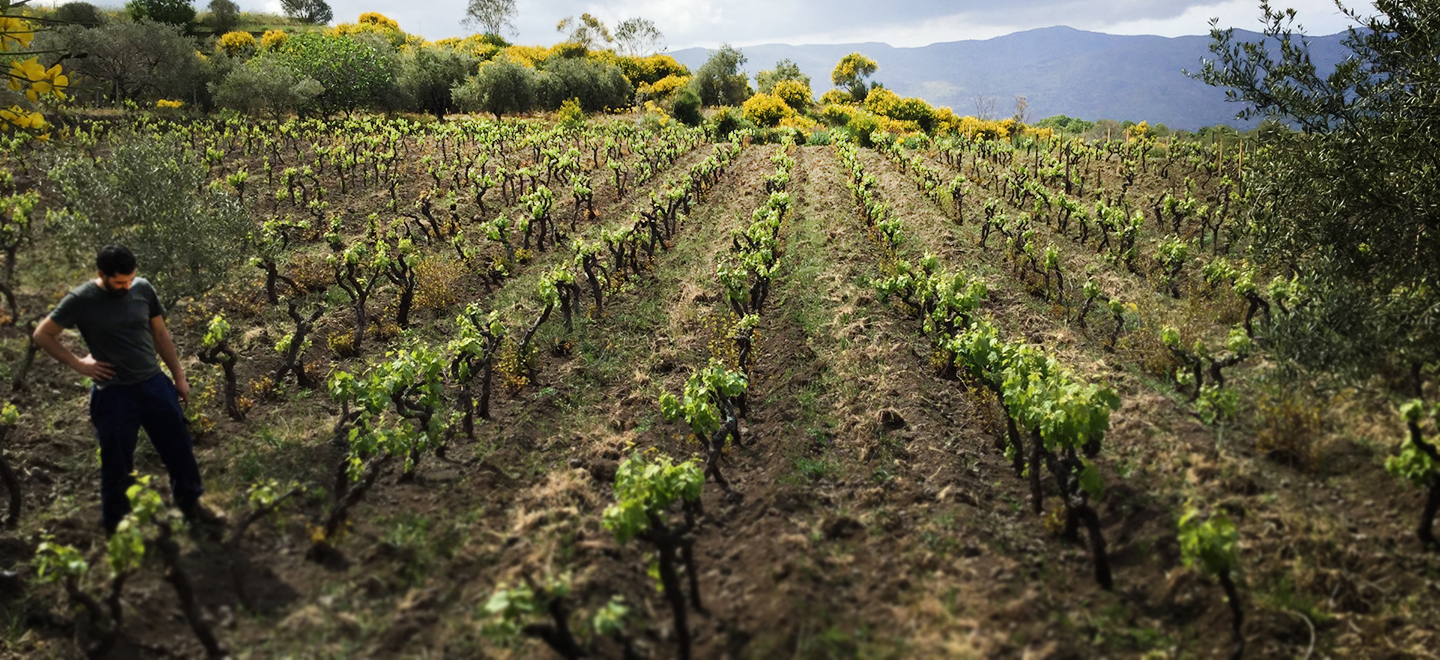 Region:
 -
Description:
I don’t think it’s hyperbole to say that this is one of the most exciting collections of wines I have ever tasted in Germany. The reasons are varied and numerous, but they all spring from the heart and skill of one person: winemaker and estate owner Simone Adams.
Simone is a young winemaker with a husband and two small children, running a 10ha farm she took over when her dad passed away in 2010. Her vineyards all lie in Ingelheim in the far northern Rheinhessen where a mix of flat and gently rolling vineyards of clay and limestone enjoy a cool microclimate tempered by the Rhein river, just 5km away. The village sits in the “knee” of the valley, protected from rain and inclement weather. Interestingly, the vineyards are on east-west facing slopes, not north-south ones, which benefits air circulation.
Simone works biodynamically in vineyards which never saw fleurbereinegung, the nationwide reorganization of German wine growing areas which in recent decades has uprooted many old vines and historic parcels elsewhere. Her oldest vines are 40-45 years old, and the emphasis is on Burgundian varieties—Pinot Blanc, Pinot Gris, Chardonnay(1.5ha), and most importantly Spatburgunder, a.k.a. Pinot Noir, planted on 5ha representing 50% of her production.
The winemaking is simple and patterned after traditional Burgundy: natural fermentations in steel, maturation in big barrels for the village wines and barriques for the single site ones, 12-18 months of aging on the lees, no fining, no filtering, and only a modest dose of SO2 added at bottling. There is no gutswein here, only wines of terroir.
Why are the offerings at AdamsWein so special? Because these are wines that feel GROWN not made, imbued with an incredible sense of life, elegant in structure, almost minimalist in form, yet teeming with vital energies. The Chardonnays with their firm spines and incandescent fruit snap the taster to attention. The Pinots put one’s cerebral cortex in overdrive, insisting on a “here-and-now” moment, posing questions and inviting speculation. The fruit is ripe – a new norm for German Pinot in our generation—but these are cool climate wines all the way, bracing and satisfying to drink. There is little doubt they will age beautifully.
When I tasted through Simone’s line-up in April of this year, I looked at her and said, “you remind me of Claude de Nicolay and her work at Chandon de Brialles.” I was trying to say that both the woman and her wines appeared relaxed, confident, totally in tune with their place, elegant in style and “natural” in the best sense with no need of make-up or pretense. She knew what I meant, smiled happily and thanked me; Claude is one of her heroes.
Taste the wines of Simone Adams and I hope that you will feel as I did that these bottles open a new chapter in German winemaking.
Image: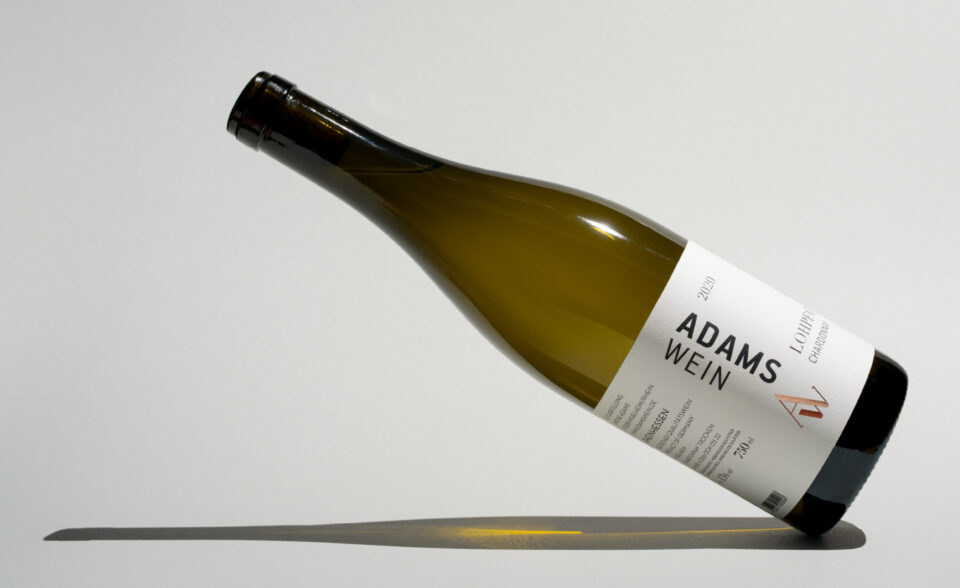 Region:
 -
Description:
Agricola Grillos Cantores is a small side project started in 2019 by Paco Leyton of Clos des Fous. The vision began in Itata when Paco met the seventy-something-year-old José Neira and visited the vineyard his grandfather planted in the late 1800’s. Paco fell in love with the head trained, bush vines comprised of Corinto (aka Chasselas), Pais, Cinsault, and Aramon located in the La Leonora subregion of Guarilihue, Itata.
The 1.5 hectare vineyard sits on a slope of white silt, sand and granitic soil, littered with mica and a high concentration of quartz. The vines are non-irrigated, plowed by hand, and naturally farmed. The steep terrain enables the vines to grow deep roots and produce complex, balanced wines that are vertical and mineral driven.
This profile and tasting notes were edited from the Brazos Wine website, along with the pictures used. For more information please visit: Brazos
Image: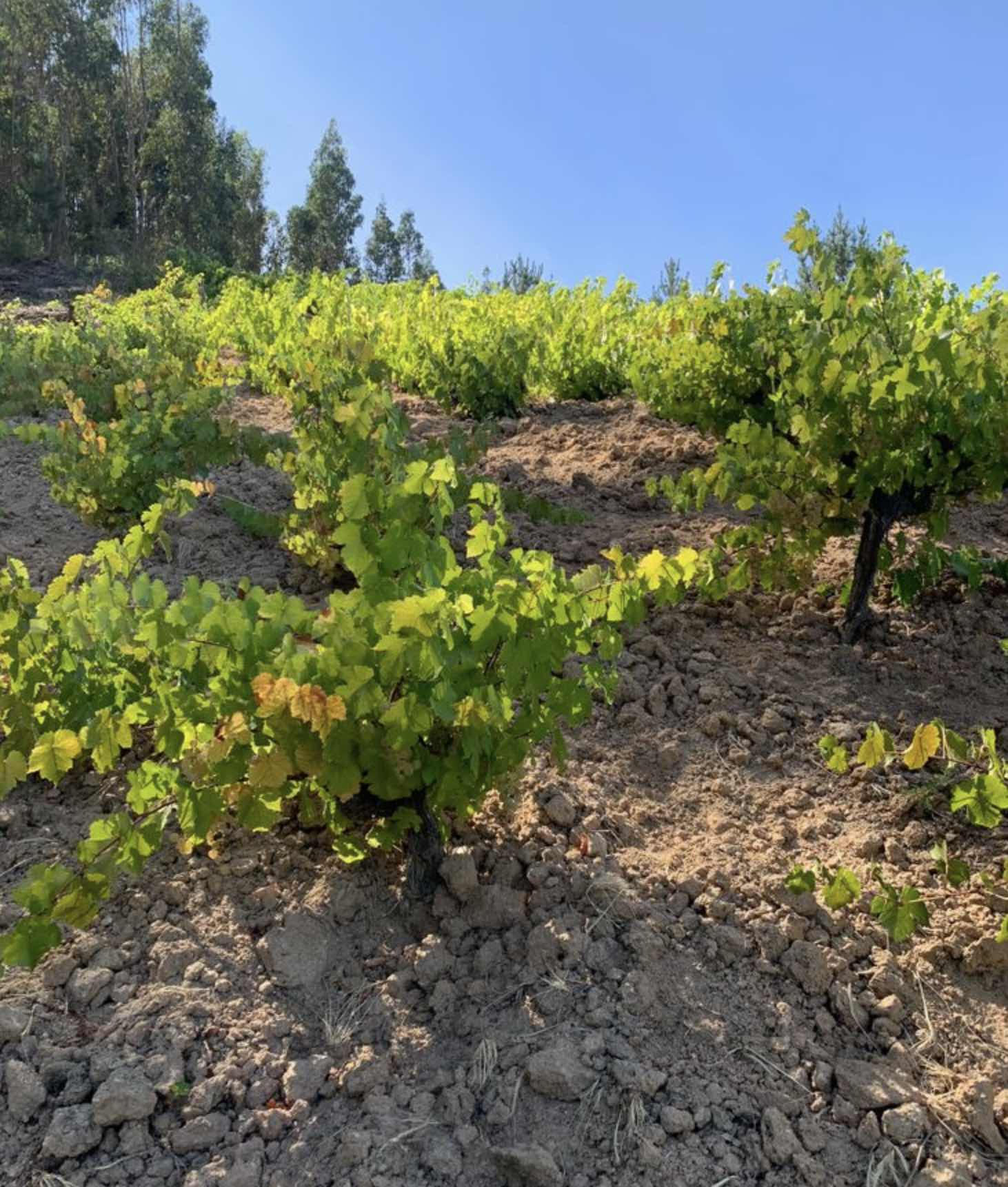 Region:
 -
Description:
For more information about Alexandre Giquel, please visit Selection Massale.
Available in California.
Image: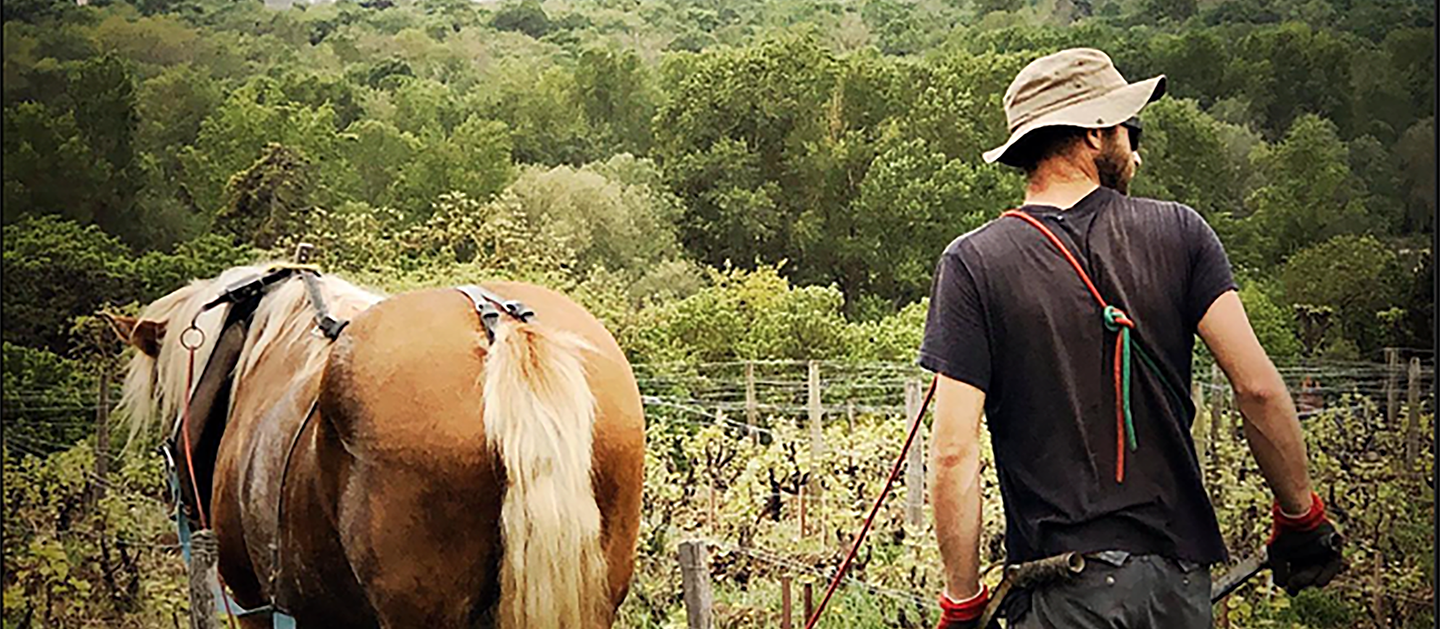 Region:
 -
Description:
For more information on Alexandre Hote, please visit Selection Massale.
Available in California.
Image: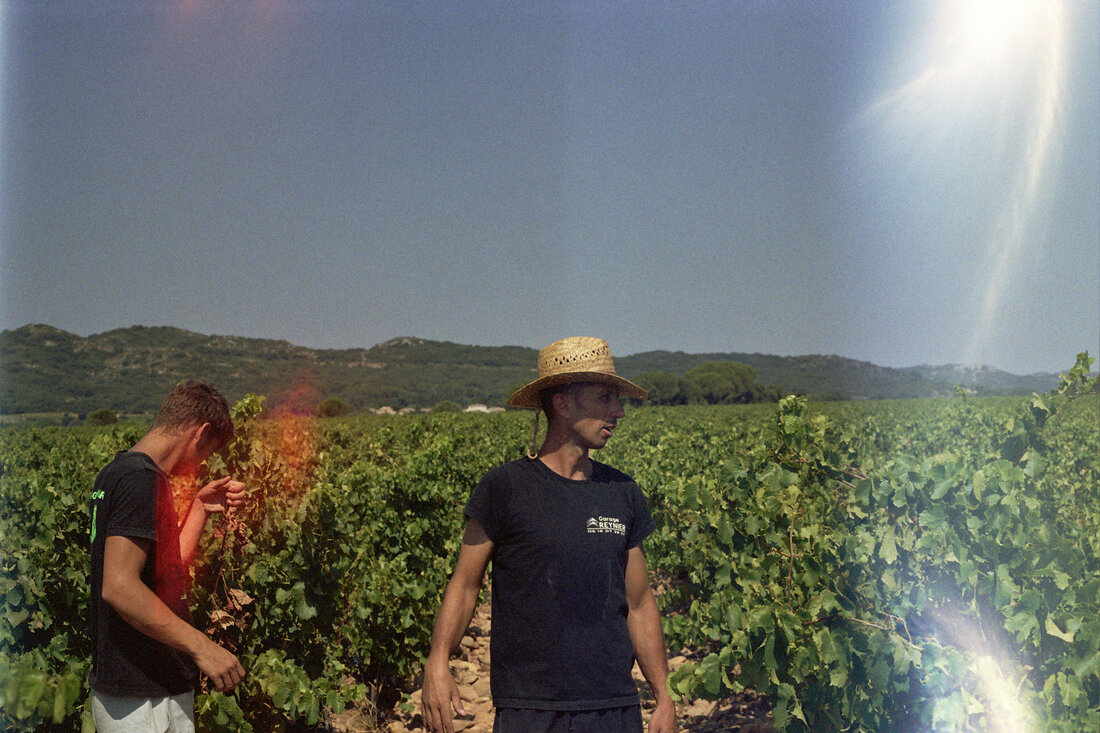 Region:
 -
Description:
Started in 1870 with a single hectare of vines on steep hillsides, the Leconte family vineyard now covers 10 hectares, made up of 40 plots spread across the villages of Troissy, Dormand, Mareuil-le-Port, Vandières, and Aÿ. Alexis took over for his father in 2013, becoming the family's sixth generation winemaker. Before returning to Champagne, Alexis spent years working in Alsace and Burgundy. His experiences convinced him that the base of good Champagne is quality still wine. The focus at Leconte is always the terroir of the wine, with effervescence as an added bonus.
Since the beginning, the guiding principle at Leconte has been highlighting the individuality of each plot. This ethos was an inevitable path to biodynamics. Conversion began right away, in 2013, with Demeter certification in 2023. For Alexis, what resonated most about Biodynamic philosophy was the belief in trusting nature, instead of endeavoring to master it. Geological testing is done on every plot to precisely identify the contents of the soil and best determine its needs. Alexis has reshuffled plantings based on his findings and seen the vines thrive.
In the cellar, Alexis continues to trust in what nature provides. Cuvée and taille are not separated and lees contact is encouraged to underscore the complete character of the grape. A wide range of vessels are employed: barrels, concrete, old foudres, and custom sideways eggs, each selected based on what will best partner with the juice. In accordance with biodynamics, tirages and rackings are scheduled around the lunar calendar. Cellar aging is slow, a minimum of two years for Totem and longer for the other cuvées, but Alexis refuses to rush the wines. Nature reveals itself in its own time.
Image: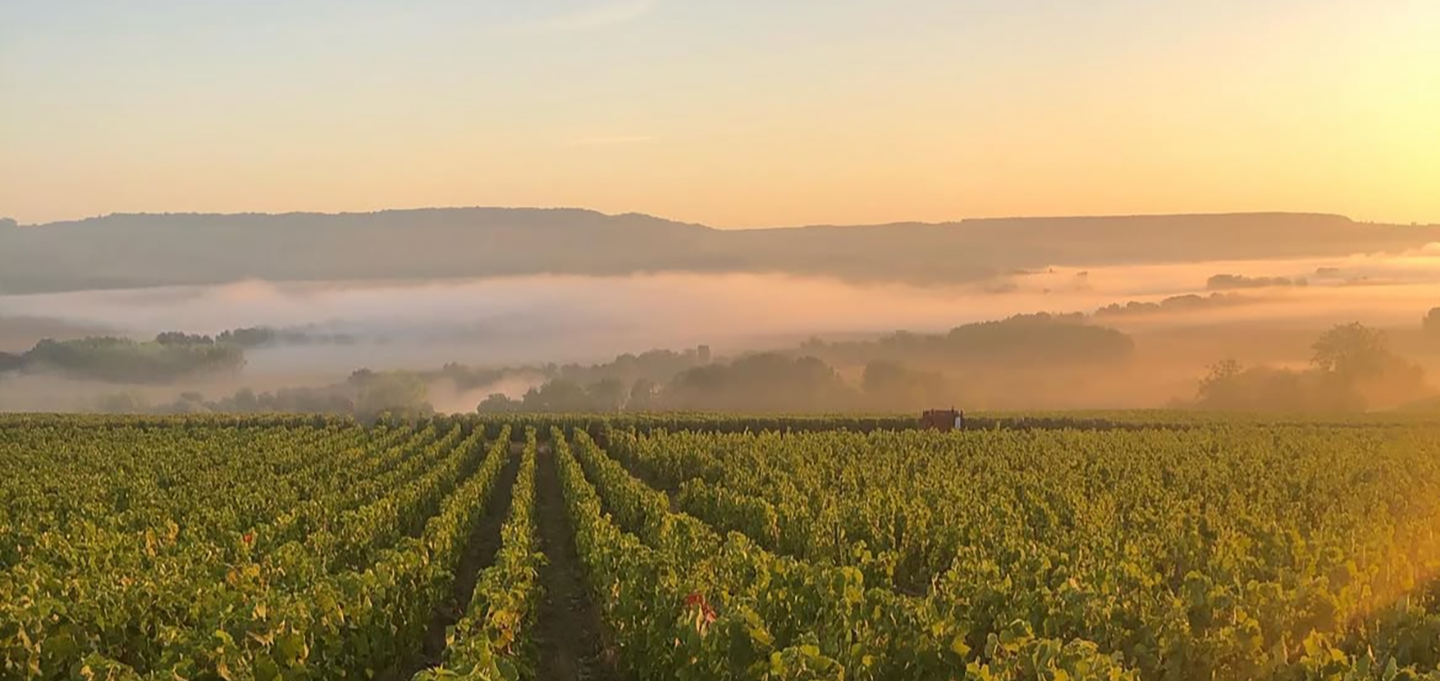 Region:
 -
Description:
Thank you to importer Louis/Dressner for this profile of De Moor:
(Click here for more on De Moor on Louis/Dressner's website)
Alice and Olivier de Moor live and work in Courgis, a small village 7km southwest of Chablis. It is where Olivier grew up, and his “old” cellar, the part where he ages his Chablis in oak barrels, is underneath his grandparents’ house. From the hill where Courgis sits, the view is of vineyards over hills all the way to the Chablis Grands Crus.
Olivier says the landscape has changed a lot in his lifetime, that all the woods, bushes and fallow land that dotted the hills have disappeared in favor of vines.
Alice is from the Jura, and the two met at a large Chablis estate where Olivier was in charge of the vineyards. Both are enologists, graduates of the Dijon enological school, with enough knowledge to take a radically different direction for their vines and wines than their neighbors. While the division of labor principally consists of Olivier in the vines and Alice in the cellar and office, both are equally omnipresent in every role and all decisions are made together.
They began their estate by planting three plots of Chablis-Bel-Air, Clardy and Rosette-in 1989. Of their first harvest in 1994, they kept only 15HL and sold off the rest. They were still employed elsewhere, but quit that fall after leasing their Saint-Bris vines: 0.55HA of planted in 1902 and 0.40HA of Sauvignon Blanc planted in 1950. For the next three years, they worked their four hectares of vines while tending the vines of other winemakers to make a living. In 1996, they planted a large plot in Chitry (the parcel is called "Champagne") with Aligoté and Chardonnay.
The whole Chablis area is highly calcareous, with soils formed millions of years ago in a warm, shallow sea. The limestone here is rich in shellfish fossils, including oysters (exogyra virgula), urchins, bivalves and ammonites. There are three estate bottlings of Chablis: "L'Humeur du Temps", "Rosette" and "Bel-Air & Clardy", the last a blend of the two plots.
"L'Humeur du Temps" roughly translates to "The Mood of the Times" but is a double entrendre that also could mean "The Mood of the Weather". The idea with this is to capture a global snapshot of the vintage versus the nuance of single vineyard bottlings. In such, the wine comes from four parcels that are vinified separately then blended: Côte de l' Etang, Les Envers de Côte Chétif, Les Goulots de Jouan.
The Bel-Air and Clardy parcels both have a shallow topsoil over layers of harder limestone with fossils, a mix of clay and limestone that is highly draining, even more so in Clardy, which has whiter clay.
"Rosette" has a more complex soil, and is much harder to work. The plot slopes up to a 40% incline, and the vineyard can roughly be separated in three distinct parts: the very top is eroded materials over hard Portlandian rock; the mid-slope is directly over Kimmeridgian marl, which can quickly suffer from drought. Finally, the bottom part is rich in dense clay with some limestone, resulting in later ripening. They usually do two harvests there, sometimes two weeks apart. They consider it their best plot.
These have none of the “normal” under-ripeness of Chablis, nor are they marked by the gunpowder aromas created by an excess of sulfur. Olivier believes that in another era, Chablis had a buttery and nutty character similar to any Chardonnay from low yields and reasonable ripeness.
He follows the same reasoning for his Sauvignon from St-Bris, which is ripe and rich, so much so that they eventually had to declassify it to Vin de France. The St-Bris terroir is eroded debris over Portlandian rock. The clay is brown, the soil draining. The Sauvignon Blanc plot has a north-west exposure, which lets it ripen slowly and get to optimal aromatic expression. This vineyard originally had 30% of its vines missing, and replacements were planted over eight years with local massale selections and cuttings of Sauvignon Gris from the Loire valley.
The other cuvées an old vine Bourgogne Aligoté called "1902" (not produced each vintage and only in small quantities), a regular Bourgogne Aligoté and a Bourgogne Chitry. A late harvested Aligoté called "D'Autres Vallées" has also been produced a handful of vintages. The Bourgogne Chitry and Bougogne Aligoté both come from the Champagne parcel, where clay sits atop Kimmeridgian marls and some silex stones are present.
Some other wines also join the fold through the De Moor's négociant project Les Vendangeurs Masqués ("The Masked Harvester"). A Bourgogne Blanc is produced from sourced organic fruit that varies every vintage and is not produced each year. A Chablis from organic fruit is produced annually. A suprisingly charming Viogner called "Caravan" has made numerous appearances, this time sourced from Gérald Oustric in the the Ardèche. And in very bad years (the reason they began buying fruit in the first place), they have sourced grapes from friends all over the South of France; a truly all-star list including Eric Pfifferling, Domaine Gramenon, Eric Texier and Émile Hérédia.
The final and most recent additions come from the 2017 purchase of two plots of 1er Cru vineyards. Vau de Vey represents 0.92 hectares of vines planted in 1953 on heavy marl that remind Olivier of the Rosette vineyard. The name is local dialect for "little valley". Their other plot of Mont de Milieu is 0.82 hectares; it is extremely steep and has to be worked by horse as it is too dangerous to use a tractor (hence why everyone else uses herbicide). The site gets its name ("Mount of Middle") because it's on the border of Champagne. The vines at the bottom of the hill were planted in the 1980's and the middle and the top in the 1930's. Yields in the old vines are very low and concentrated due to Court Noué.
The De Moors have worked their vines organically since 2005, a rarity in their area. In 2002, they stopped using large harvest bins and replaced them with small boxes where the grapes are not crushed by their own weight. In 2007, they built a large and high-ceilinged winery, allowing them to do all their cellar work by gravity. In 2008, they purchased a second-hand pneumatic press to treat the grapes in the gentlest way possible. There is no SO2 used at harvest or during the vinification. Aging has traditionally been in Burgundian barrels of different ages for the Chablis wines, the Bourgogne Chitry and the old vine Aligoté, with young vine wines and Sauvignon aged in cement and stainless steel tanks. Over the years this has evolved: 228 liter Burgundian barrels are still the most common vessel, though demi-muids and foudres of various sizes have joined the fray along with enamel-lined stainless steel tanks and even a few anforas.
Image: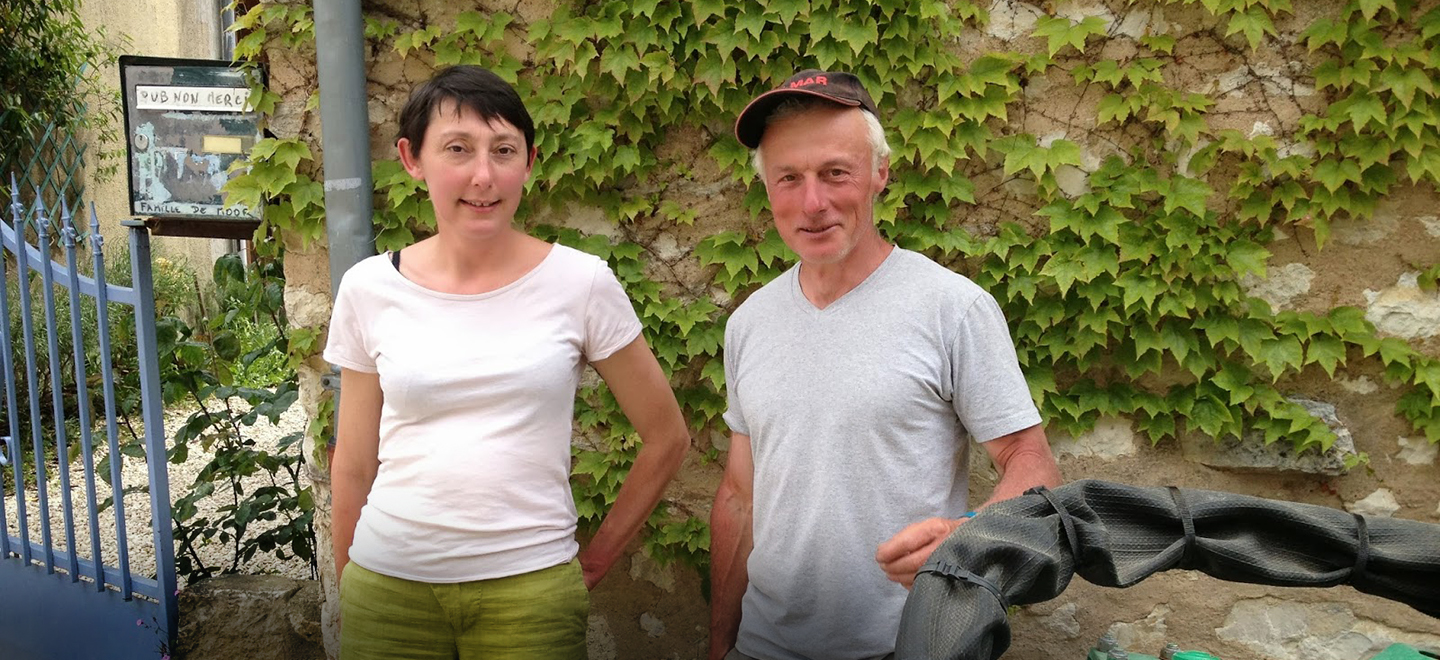 Region: