Lyrarakis
- Crete, Greece

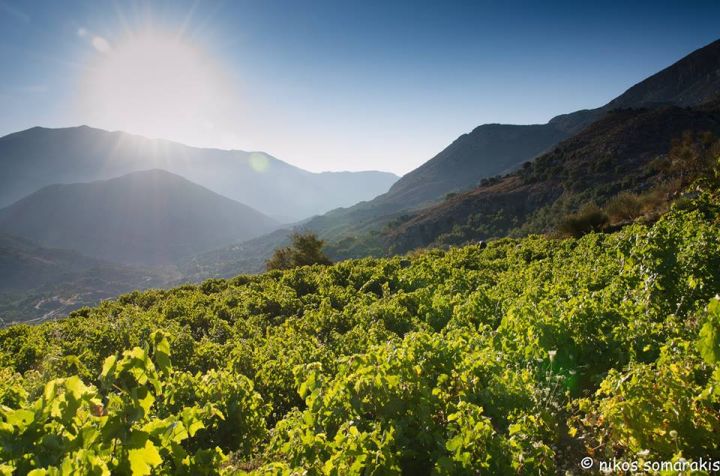
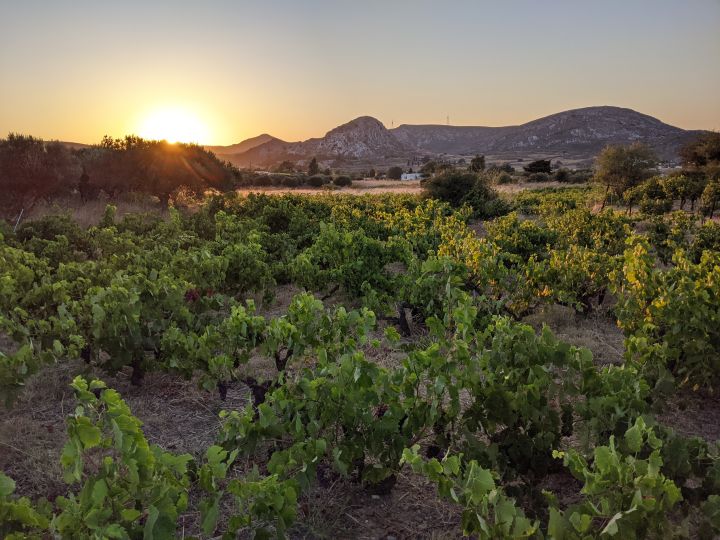
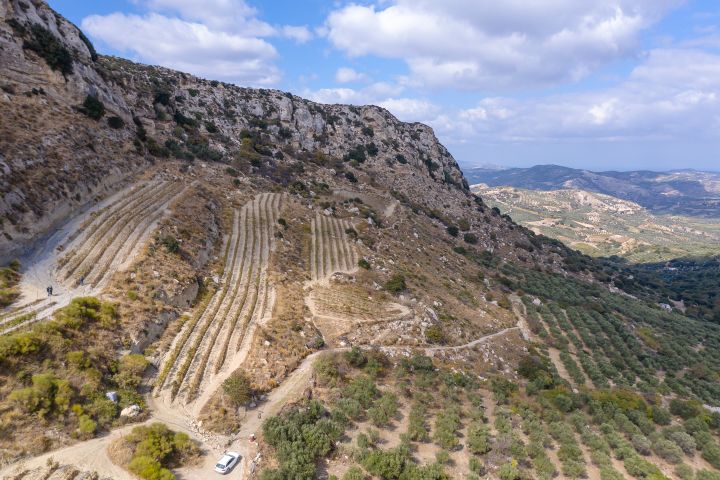
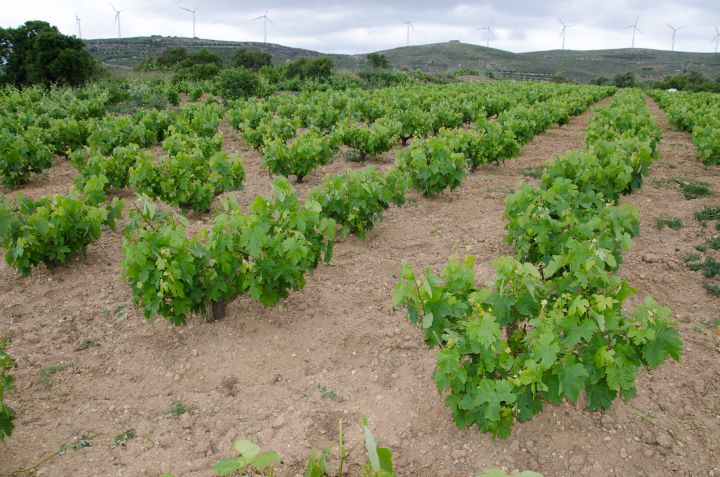


Crete (Kríti, or Κρήτη) is the fifth largest island in the Mediterranean, after Cyprus, Corsica, Sardinia, and Sicily. It has five distinct mountain ranges, with several peaks raching nearly 2500m, often snow-capped into the summer months. Its dizzying array of landscapes, exposures, and altitudes have harbored important pockets of flora and fauna, making Crete the most biodiverse island in the Mediterranean. UNESCO has designated several Global Geoparks and Biosphere Reserves. Equally fascinating is its cultural background, with its winemaking dating back to antiquity. In the Bronze Age it was the home of the Minoan Civilization (considered Europe's first advanced society), later under control of the Venetian Republic, and eventually part of the Ottoman Empire. Though it is thoroughly Greek and produces 20% of Greece's wine by volume, Crete was not officially part of Greece until 1913. With this layered geography, ancient connection to winemaking, and loaded cultural and political backdrop, it's easy to draw parallels to Sicily.
Lyrarakis is a pioneering winery on the island. Brothers Manolis and Sotiris Lyrarakis founded the estate in 1966, initially focused on bulk wine production and then private labels and bag-in-box for local tavernas. By the early 1990s, they shifted their approach to estate bottling, with a singular focus on the indigenous varities of Crete. They are credited with saving from extinction three Cretan white grape varieties: Dafni and Plytó were planted in their 'Psarades' vineyard in 1992 and Melissaki in the 'Gero Deti' vineyard in 2010.
Today, Sotiris' son Bart manages the winery. Bart, whose mother is Dutch, could not stray far from his memories as a child cellar rat. He left a life as a software designer in Holland to return to his homeland, and has been at the helm of Lyrarakis since 2003. Accompanying him in total trust are winemaker Myriam Ambuzer (hired 2004) and viticulturist and ampelographer Nikos Somarakis (hired 2007). Over twenty vintages they have explored various terroirs across the island, expanded their single-vineyard bottlings, and have honed their farming to one that is ultra-respectful of biodiversity. Lyrarakis owns 15 hectares, rents another 2.5, and worked with 164 small-scale farmers over another 80 hectares, historic suppliers to the winery.
Myriam, daughter of a Palestinian father and Cretan mother, has had a huge influence at Lyrarakis. She is a master interpreter of vintage and site, considering protracted harvests often starting in mid-August and end in late September, disparate microclimates, vineyards that span from 250m to 950m, and eleven indigenous varieties: Liatiko, Mandilari, Kotsifali for the reds; Vidiano, Vilana, Thrapsathiri, Muscat of Spina, Dafni, Plytó, Melissaki, and Assyrtiko (the 'foreigner non-foreigner') for the whites. These are varieties that one learns only through instinct, adaptability, and experience.
Nikos Somarakis is considered one of the top vineyard managers in Greece. As of 2020, all of the estate vineyards achieved Greece's rengerative organic certification. He has created a compost loop that uses the vineyards' cuttings, skins and stems from the cellar, and pumace from local olive mills. Over the years has stopped tilling the vineyards, moved to higher elevations, favored north and northeastern exposures, and returned to the "lyra" system of trellising higher of the ground. He also trains the estate's many growers in these systems to the point that the majority have adopted his ways.
Bart is the ringleader who keeps it all together, maniacally coordinating the many growers and pick dates and representing Lyrarakis at large.
The Queen labels, depicting appromixations of traditional Minoan dresses, offer tremendous values and an intro to Cretan wine culture. These are single-variety wines, blended from various sites, with some grapes coming from the home sites and others from the grower-collaborators. The single-vineyard sites, such as 'Aggelis,' 'Vóila', and 'Psarades,' are often made from very old vines (some pre-phylloxera) and offer increased complexity and ageability.