Producers
-
Description:
Pielihueso. Spanish for “skin and bones”, this estate began in 2017 when father/daughter combo Celina and Alejandro Bartolome planted vines in Los Chacayes and Los Sauces (both subregions of the Uco Valley located within Tunuyan). The wines are all farmed organically and made with no corrections, fermented with native yeast and a low addition of sulfur is added just before bottling. Alejandro comes from a long background in organic farming and this is the family’s first foray into wine. The labels were created by the family too! Carmela, the other daughter designed the labels from their brother’s artwork. The wineries style is making light, bright, clean and vibrant wines!
This profile and tasting notes were edited from the Brazos Wine website, along with the pictures used. For more information please visit: Brazos.
Image: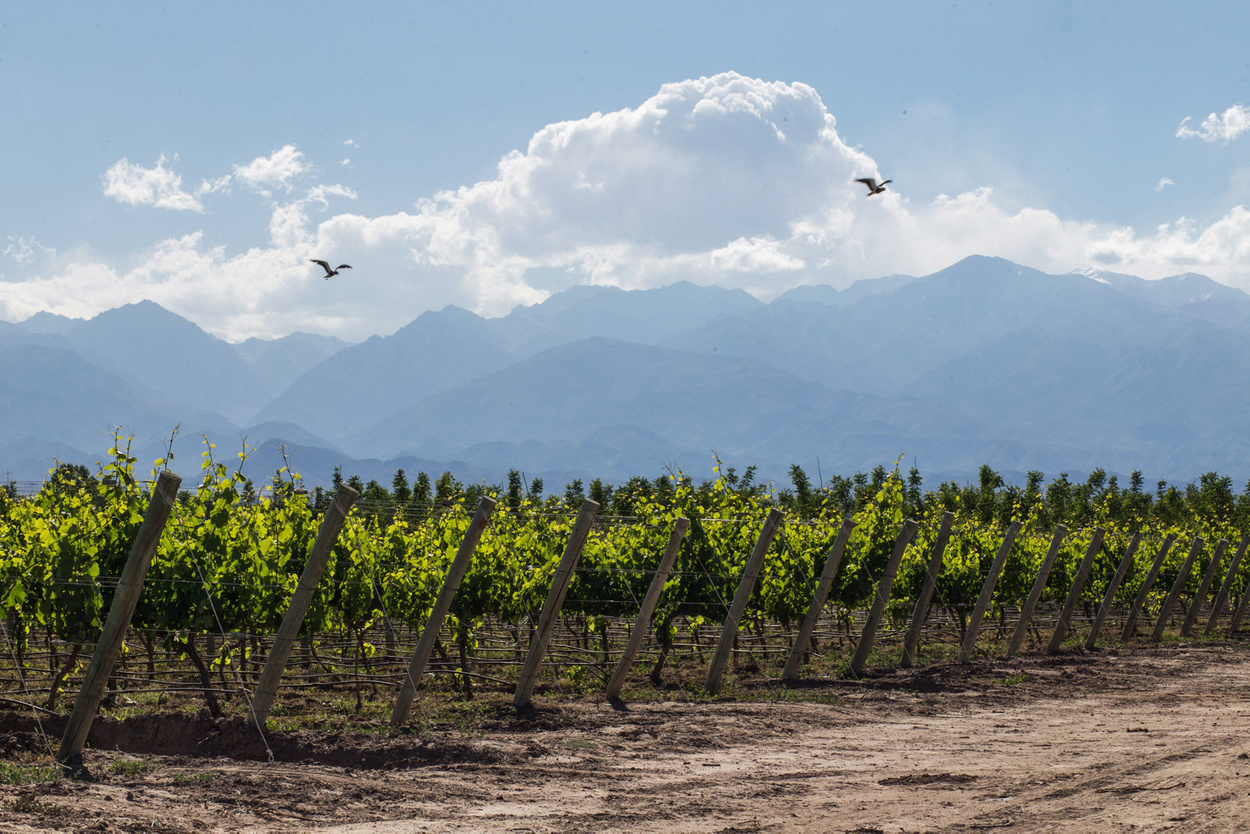 Region:
 -
Description:
Angers native Pierre Borel is a man with a plan. After an Oenoviti diploma and stints in Muscadet and all around the Loire valley, notably at Domaine des Griottes - where he first learned about natural wine - and most recently at Domaine du Mortier, he picked a small but historical parcel of a very unique terroir within the village of Bourgueil to start his estate. The vineyards sit just a stones throw from the historic Benedictine Abbaye in the center of town.
Pierre's style of wine is dictated by his terroir, which he believes is meant to produce more easygoing, fruit-forward wines. The grapes are harvested by hand quite late in the season for the AOC - often times he doesn't finish until well into October, a few weeks after his neighbors - as they seem to ripen more slowly in the cool, deep gravel soils. He picks in multiple passes over a few days to make sure the fruit is as close to perfect ripeness as possible and begins all vinifications without sulfur. There is no wood in the cellar as he doesn't think the young vines and the style of wine he is focused on would benefit from barrel aging, and he is a very thoughtful about SO2 additions. "Adding sulfur to a tank is a very traumatizing experience." he once said during a tasting.
This new shipment is fresh, delicious, and perfect for the cooler months ahead.
Image: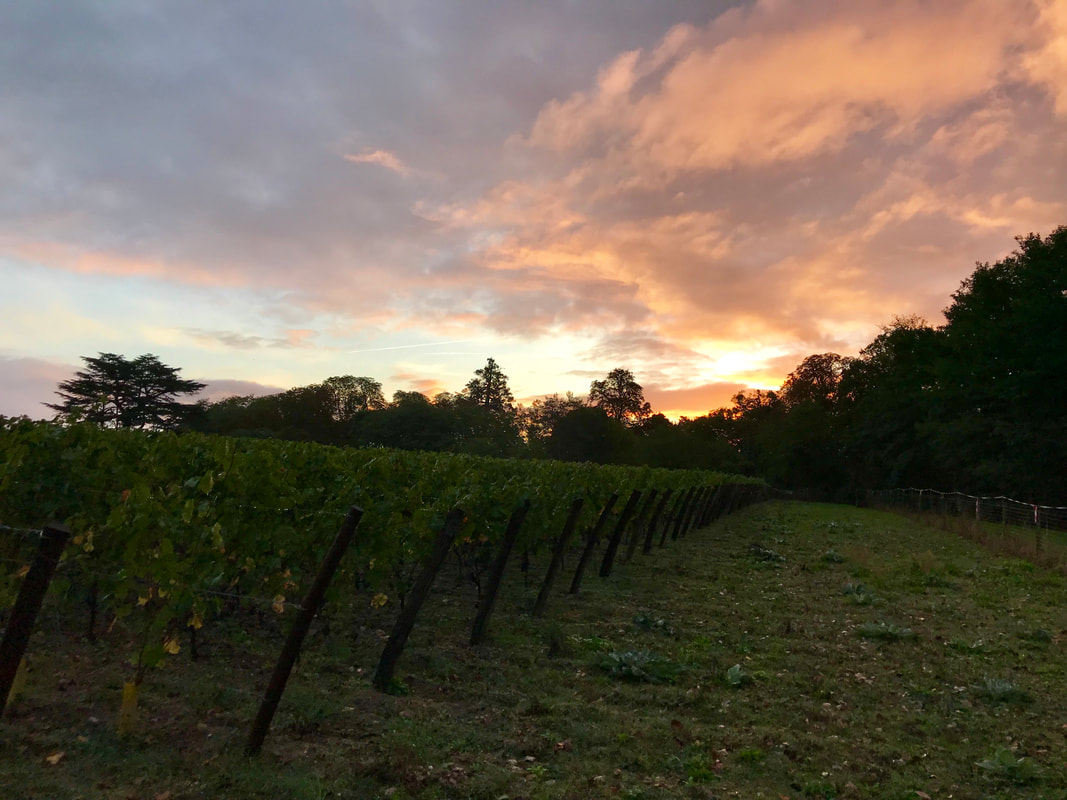 Region:
 -
Description:
Thank you to importer Louis/Dressner for this profile of the Pinon estate:
(Click here for more on Pinon on the LDM website and here for Pinon's own website)
The wines of François and Julien Pinon are considered among the finest of Vouvray. François, a former child psychologist, took over the estate from his father in 1987, and has steadily made a name for the estate. He is a serious winemaker whose main focus is "to keep the typicity of both the appellation and the vintage" in all his wines. Julien's arrival has cemented the family's dedication to organic viticulture and minimal intervention winemaking.
The vineyards are in the corniche of the Vallée de Cousse. The soil is clay and silica on a base of limestone (tuffeau) with flint (silex) and the area is rated among the top sites in the appellation for Vouvrays of distinction and long life. The Pinon follow a discipline of plowing the vineyards, not using chemical fertilizers and pesticides and, of course, he harvesting by hand and uses not using cultured yeasts in the cellar. All new plantings are done by selection massale and no nursery clones are used; the vines are an average of 25 years old. The estate has been certified organic since 2011.
The alcoholic fermentation occurs in wood barrels. Then the wines are aged in stainless steel or foudres (big casks, about twice the size of barrique Bordelaise) to obtain a balance between fruit and reduction. There is one racking to remove the heavy lees and the wine remains on its fine lees until bottling, which takes place a full year after the harvest to “finish” the wine. Rather than use a large dose of SO2, Pinon prefers to gently filter his wines to ensure their stability and aging potential.
The two main wines of the estate are both meant to highlight the area's two distinct terroirs. The "Trois Argiles" cuvée, grown on heavy clay with limestone subsoils, is what is termed a vin tendre; the sweetness is between a sec and demi-sec. It has a delicate sweetness in the attack that gives over to a pleasant citrus finish with resonance and length. It has flavors reminiscent of apples and quince with a slightly spicy accent. This wine will continue to develop with age, but is affable and charming when drunk young.
"Silex Noir" is named for the black flint soils characteristic of two parcels totalling 3.7 hectares. Just like limestone, flint is left by ancient seabeds. Millions of shells and other organisms make up deep layers of limestone (or chalk), while more complicated chemical interactions between silica (contained in seawater) and organisms such as sponges created nodules of hard flint, which embedded itself into the limestone.
The other significant part of production are the sparkling wines (bottled brut nature and brut) produced from grapes on more neutral soils as well as the estate's youngest vines. The weather of the vintage will affect the amount of sparkling made each year: if it was a rainy year, the Pinon make more sparkling because in drier vintages, the grapes reach maturities more suited for still wines.When the weather in September and October creates the right conditions for noble rot and/or passerillage (sun or wind-dried grapes), Pinon makes a whole range of Vouvrays: sec, demi-sec, moëlleux, and, more rarely, a grain par grain selection that results in a liquoreux.
Image: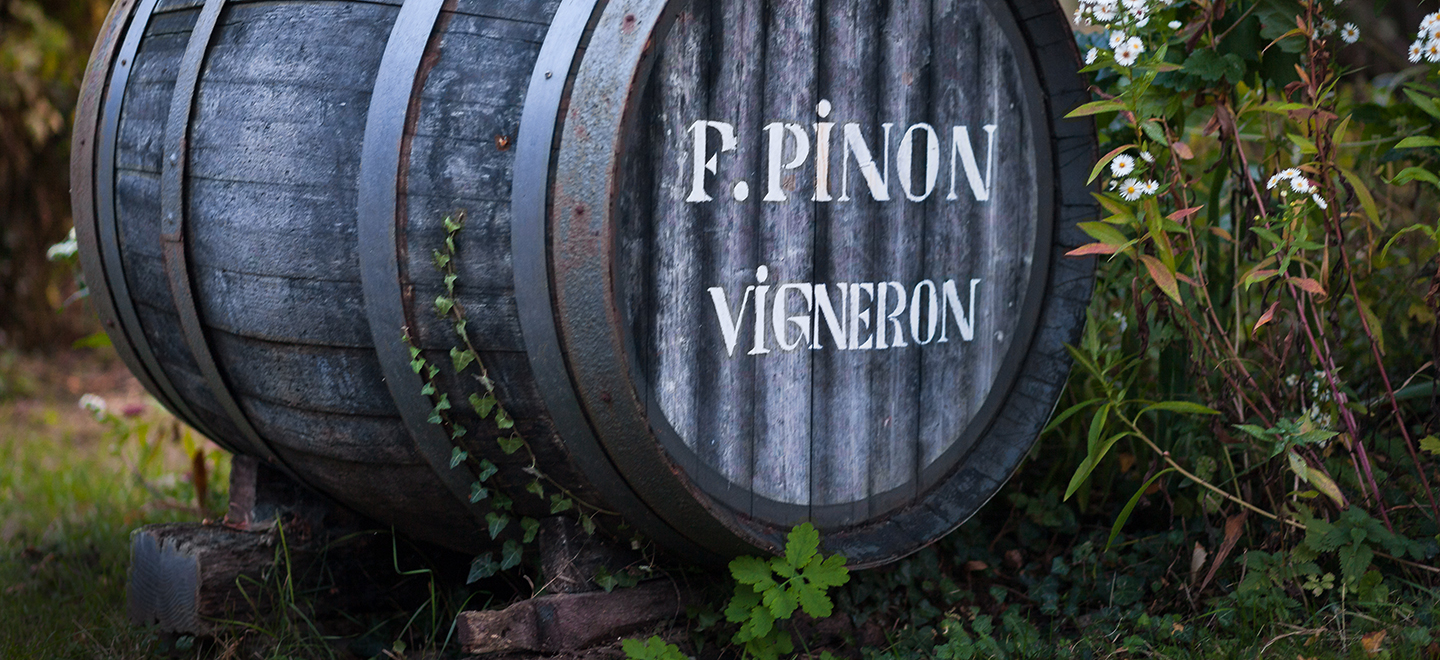 Region:
 -
Description:
Patrick Piuze- a Montreal native- took the region by storm when he arrived over decade ago.As for technique, he is a maverick. While 90% of Chablis is machine-harvested, he has a team of 70 harvesters, a paramount factor in the quality of his wines. Piuze works with seventeen different growers, purchasing fruit from approximately 25 hectares, and his great relationships with the growers of Chablis have allowed him access to choice parcels in all of the great sites.
While most vintners make one blended cuvée from mixed sites for their villages wine, Patrick obsessively crafts no fewer than ELEVEN different villages-level wines, each giving a distinctive expression of terroir. To make wines this way, Patrick has become a walking encyclopedia of the terroir of the area. On a recent visit to his winery, Patrick explained that Chablis is made up of rolling hillsides and valleys. The tops of the plateaus are generally Petit Chablis, north-facing vineyards are generally village-level Chablis and south-facing vineyards are 1er Cru; the Grand Cru hill has direct west/south-west exposure. The vineyards on the left bank of the Serein River generally have more clay and produce richer wines; here you find the villages of Courgis, Chichée, and 1er Cru vineyards: Forêts, Butteaux, and Vaillons. The vineyards on the right bank have much less clay top soil and more limestone – this is where you find the Grand Cru, also the villages of Fleys and Fyé and the 1er Cru, Montée de Tonnerre.
In the cellar, fermentations are spontaneous and go at their own pace. The village level "Terroir" series wines are fermented and aged mostly in old stainless steel tanks that are not temperature controlled. Premier Cru and Grand Cru wines are fermented and aged in used barrels for ten months. The barrels are always from high-acid years. All wines go through malo naturally. The village level wines are bottled in the spring and 1er Cru and Grand Cru wines are bottled in late June early July. All wines are bottled with a very gentle clay filtration.
Image: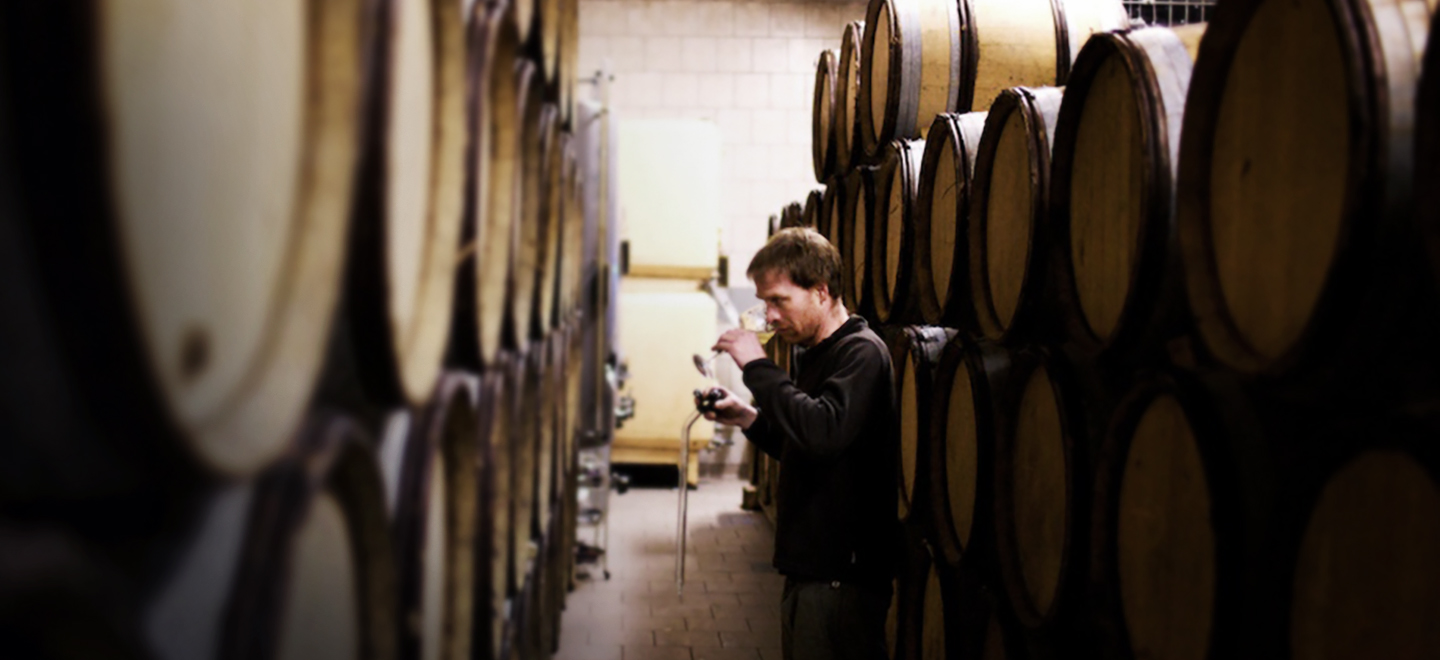 Region:
 -
Description:
Laurence Ployez is a third-generation winemaker at her family's estate, which was established in 1930. Ployez-Jacquemart owns 3.5 hectares of Premier Cru and Grand Cru vineyards in Ludes and Mailly-Champagne in the Montagne de Reims, known for its classic chalk slopes; in addition, Laurence purchases Premier Cru and Grand Cru grapes from 12 hectares of vineyards from growers that the family has worked with for three generations. Farming is organic or HVE certified depending on the parcel. All of the work in the vineyards is done by hand, from the beginning of the growing season until the grapes are harvested.
Unlike most producers in Champagne, she strives to keep the characteristic of each vintage even in her NV blends and only uses a very small amount of reserve wine, if any at all. Only first press juice goes into the Ployez-Jacquemart wines. A light filtration is used for wines produced in vats, but no filtration is used on wines aged in wooden barrels. The wines undergo a very slow bottle fermentation in a 25-meter-deep cellar, giving them extremely fine bubbles. Wines are aged nose-to-punt, or sur pointe, in lieu of being aged on their side; aging sur pointe provides the antioxidative and aging benefits of the lees while not allowing the wines to become too rich from the lees contact. When the wines are ready to be disgorged, after up to 12 years in the cellar, only a very minimal dosage is added, typically 3-4grams per liter. Ployez-Jacquemart's goal is to leave the structure of each wine intact, allowing the true character and personality of the harvest to shine through.
Ployez-Jacquemart is regularly recognized as a top producer by Peter Liem, Jancis Robinson, Revue de Vin de France, View from the Cellar, The Wine Advocate, and The Wine Spectator.
Image: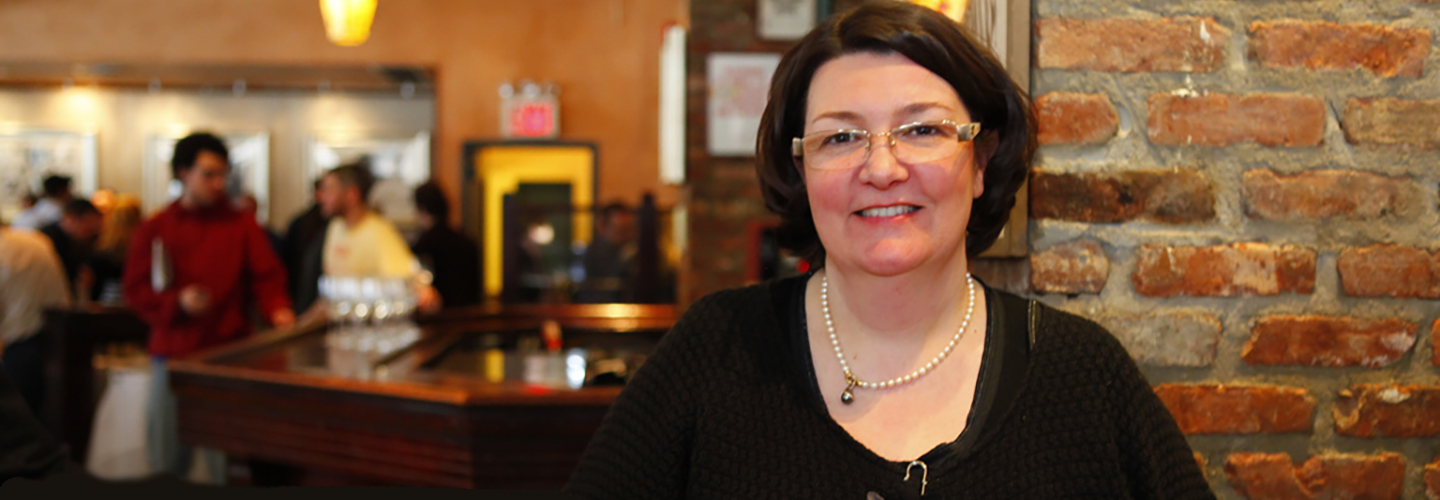 Region:
 -
Description:
Back in Italy in 2012, at a previous company—during what now seems like a previous lifetime—I was courting a Lambrusco producer. It wasn’t meant to be, but this producer said, “you should meet my cousin.” If you know Italy and its ionic bond-like familial ties, you know that these types of re-directions can go either way, completely fizzling or exceeding all expectations. Paolo Crotti of Podere Giardino met me at VinItaly, in the burgeoning ‘organic growers’ section. He didn’t have a stand, but he brought one bottle and we tasted rogue in a corner. I found Paolo and the wine honest and open, neither one trying hard to be something. I love healthy, lively, “whole wheat,” everyday wine, and this was it.
But Podere Giardino is not simply a vineyard and winery. It’s a polyculture farm, wine being a small slice of the pie—or, more apt, a small shard of the cheese. Siblings Paolo, Federica, and Marco wear many hats, shifting from commercial duties, vineyard work and wine production, or tending to their milk cows. Give them a call and you’ll likely hear a cow moo or a tractor purr in the background.
Fifty hectares are owned, only five of which are dedicated to grapevines. The rest of their land is for pasture for forage for the cows, grains and cereals, fruits and vegetables, and some uncultivated woods. Of course, being a stone’s throw from Reggio Emilia, they make excellent Parmigiano Reggiano. Paolo has been known to bring vacuum-packed boulders of cheese to NYC. The farm also sells raw milk, both in bulk and via a milk-dispensing vending machine at local farmers’ markets—insert some bills and fill up your vessel…
Ah, right, I’m supposed to be talking about wine…
The vineyards, like the rest of the farm, are certified organic. The grape varieties are the local ones: Malvasia di Candia Aromatica, Lambrusco Marani, Lambrusco Salamino, Lambrusco Oliva, Lambrusco Maestri, Lambrusco Grasparossa, Malbo Gentile, and Ancellotta. For a few generations, grapes were sold to the local cooperative winery, made up of 300 grower members. As one of only three families farming organically, they felt it was time to break free from the co-op, and in 2007 made their first estate-bottled wine, a Charmat-method red Lambrusco called Suoli Cataldi, named for the sandy clay soils of the area. Since then, the range has expanded, including an increased exploration of metodo ancestrale, secondary fermentation in bottle, without disgorgement or sulfur. The wines delightfully toe the fine line between feeling natural and territory-driven.
We welcome Podere Giardino, which, though new to Bowler, feels as though it’s coming home to roost.
-Kevin Russell, Italy Portfolio Manager
BOWLER E-Zine Issue 4 | January 2022: Compost Cookery with Foradori, Hoch, Bucklin, and Podere Giardino
Image: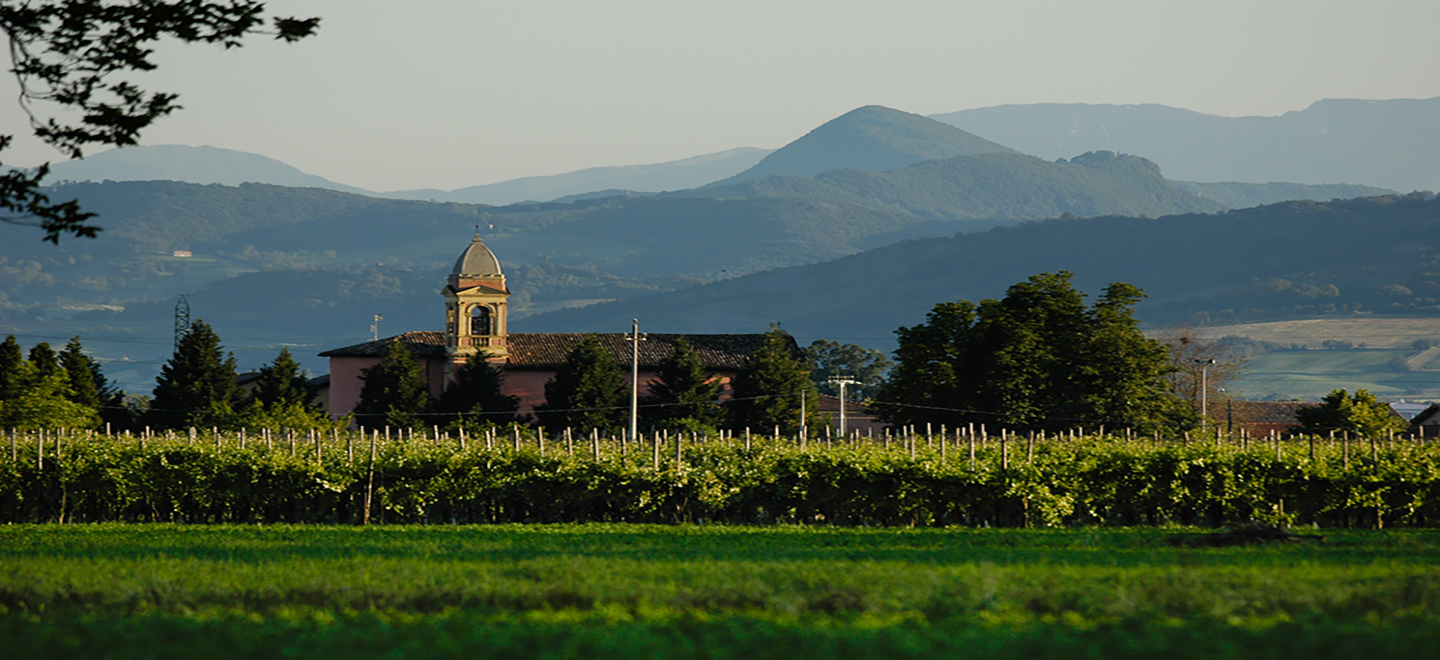 Region:
 -
Description:
Max Brondolo has been directing the wine in his veins and dreams in his mind into the roots of his young estate, Podere Sottoilnoce, located in the town of Castelvetro di Modena.
Originally from Milan, his grandparents were Emilian on one side and Piedmontese on the other. The nonni from Piedmont had vineyards in Belveglio d’Asti, in the hamlet of Brondoli, where his grandfather grew Barbera, Grignolino, and Moscato. Max’s childhood memories are tied to summers on the farm: the barn, the animals, stealing grapes from the vineyard, the harvest. His father would open Beaujolais Nouveau in mid-November and Bordeaux at dinners with colleagues; but at family lunches, the wine was always the grandfather’s, with hand-written labels. Max spent his first paychecks on wine, and wine became his consuming passion. This imprint stayed with him through a career as a business entrepreneur. Then came the U-turn. At age 40, he married his wife, Stefania, and life took them to the countryside of Modena, which they felt was better suited to raising a family than Milan.
Modena has given us significant emblems of Italian culture: balsamic vinegar, Ferrari, Maserati, Luciano Pavarotti. And Lambrusco. Lambrusco…wonderful, diverse, convivial, supremely food-friendly—and, lest we forget, one of the most successful exports ever from Italy to the United States. One brand alone hit 11.5 million cases sold in a year, a record that still stands as the highest sales for an imported wine in U.S. history. Dollar signs replaced pupils in eyeballs, a behemoth was unleashed, and a wine with hundreds of years of history was reduced to a commodity. "Italian Coca-Cola!" So it goes sometimes.
Max arrived in Castelvetro di Modena with a long-standing desire to make wine, but he was also deeply pessimistic. In his mind, two-Euro wines on the bottom shelves of supermarkets were what defined the area. Luckily, he quickly encountered the wines of Vittorio Graziano, Gianluca Bergianti (Terrevive), and Claudio Plessi. A whole world opened for him. He was surprised to discover the enormous diversity of the area's grape varieties and considered a strategic opportunity: an area with so many varieties capable of producing high-quality wines, yet with such a low profile, was unheard of in Italy. This was coupled with a name that—even if associated with low quality—needed no explanation: everyone knows what Lambrusco is, it's a sparkling red wine. It "just" needed to tell its true story through traditional, clean winemaking methods, carried out using natural agriculture, and distancing itself as far as possible from industrial winemaking (autoclave).
In 2016, he found a young one-hectare vineyard of Lambrusco Grasparossa for sale. In the middle of it all, a gigantic walnut tree. He fell in love with the place. Podere Sottoilnoce—the farm “under the walnut tree”—released its first vintage in 2017. Today, there are 6.5 hectares of vineyards among an additional 7.5 hectares of woods and meadows, all conducted in biodynamics. There are the white grapes Trebbiano Modenese and Trebbiano di Spagna, classically the backbone of balsamic vinegar. There are many different biotypes from the loosely-related Lambrusco family—some familiar like Lambrusco Grasparossa or Lambrusco di Sorbara, others like Lambrusco del Pellegrino time-warping in from the Renaissance. And then there is everyone’s new favorite, the rainbow-colored Uva Tosca, impervious to artificial intelligence. The wines are vinified dry and then undergo secondary fermentation in bottle around February/March under a waxing moon, triggered by the sole addition of grape must. They are undisgorged and kept under crown cap. The striking labels are the work of artist Denis Riva. Some of them are original pieces and were not specifically drawn for Sottoilnoce, while Cattabrega and Trifalco are Denis’ visual response to drinking the corresponding wines.
What’s old sometimes becomes new. Even better is when the thing coming around feels not nostalgic, but contemporary. Sometimes it takes an outsider-dreamer to be a conduit. Max helped develop a collective called ‘Modena: The Frizzante Revolution,’ nine like-minded organic/biodynamic growers in Modena, the cradle of naturally-fermented wines. They have done trade events in Toyko, Copenhagen, and New York.
There is so much more that can be said about the fun, delicious (but also true and real and kaleidoscopic) world of Emilia frizzanti rifermentati. The best way to hear the story is to jump off this page, gather good friends, good food, and many bottles. And the revolution, mostly untelevised, will quietly crackle on.
Image: Region:
 -
Description:
Robin Pollard, former executive director of the Washington State Wine Commission and, more importantly a local coffee roaster, returned to the industry she once led with the release of the 2015 Pollard Vineyard Cabernet Franc.
Teaming up with her life partner, Chris Camarda of Andrew Will Cellars, Robin seeks to express her high elevation Yakima Valley vineyard though plantings of Cabernet Franc, Merlot, and Cabernet Sauvignon.
The fruit comes from Robin’s 10 acre estate vineyard located in the Upper Yakima Valley, which she purchased in 2014. The vineyard, sitting at 1150 feet on a southwest facing slope, is planted to half Cabernet Franc and one quarter each of Cabernet Sauvignon and Merlot grapes in silt-loam over limestone soils.
Image: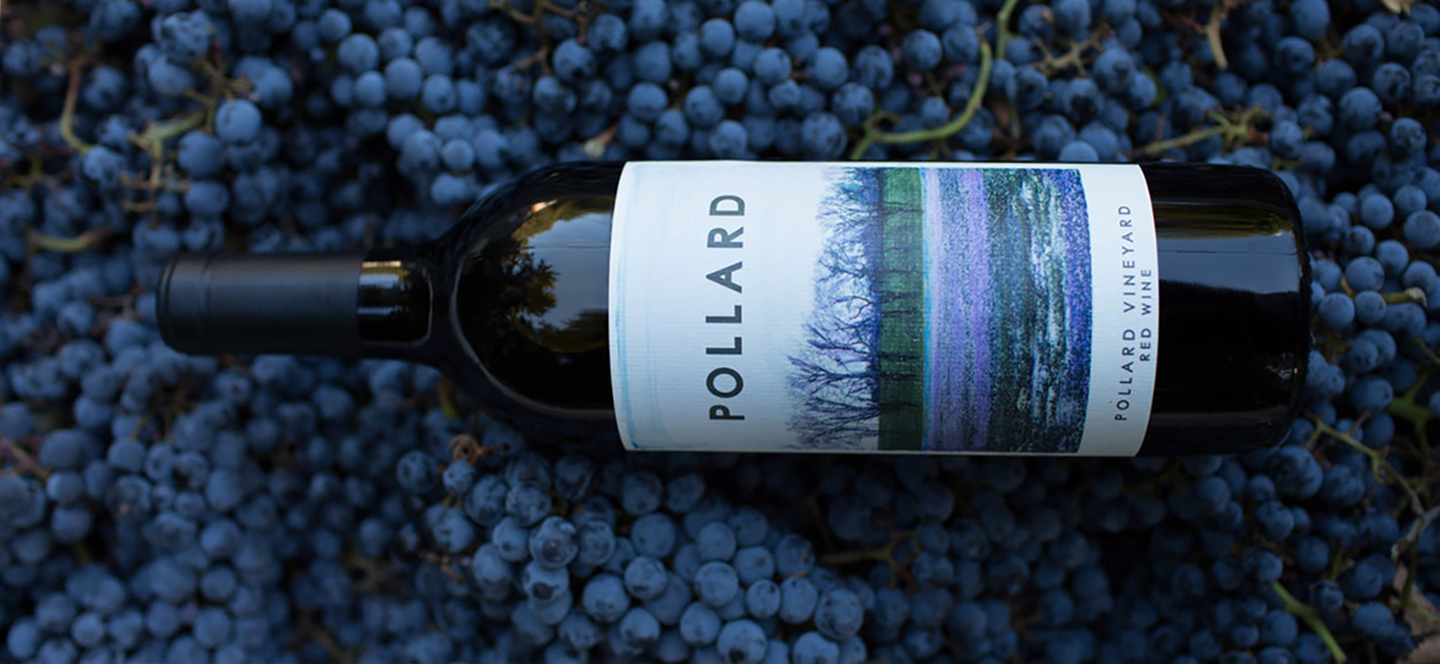 Region:
 -
Description:
Porter Creek is owned by Alex Davis, who biodynamically farms his low-yielding, hillside grown vines in the Russian River Valley.
The winery got its start in 1977 when Alex's father George Davis purchased 40 acres of land off Westside Road in what would eventually become the Russian River Valley AVA. Seeing that it was an ideal location for growing Burgundian varieties, George planted 10 acres of Chardonnay in addition to the 12 acres of Pinot Noir already on the land. The winery was bonded in 1982 and for the next 15 years, George paid no attention to the ever-changing wine trends and simply worked to express the unique terroir of the Russian River Valley.
In 1997, George handed wine-making responsibility to his son, Alex. In addition to growing up working along side his father at the winery, Alex studied Enology at Fresno University and spent several years in France working with renowned wine makers including Christophe Roumier and Marcel Guigal.
Although the style at Porter Creek has remained true to George’s original vision, one major change Alex made was the transition of their vineyards to biodynamic farming. Rigorous attention is paid both to the soil and the vines to ensure the entire vineyard is operating in harmony. The results are pure, balanced wines that speak strongly of their source, not just the hand that got them into the bottle.
The winery produces Pinot Noir and Chardonnay from the 20-acre estate vineyard, and also purchases fruit for the Zinfandel, Carignane, Syrah, Viognier and a few other variety wines.
In the cellar, Alex uses about around 30% whole cluster on the Pinot Noirs, while the whites are direct pressed. Following a 3-4 day cold soak (for the Pinots), native yeasts are used for fermentation which happens outdoors in stainless steel tanks. Aging is done in 25-30% new oak.
Click here to read Bram Johnson's review of Porter Creek Vineyards!
Image: Region:
 -
Description:
Praesidium is a 7-hectare estate in the Peligna Valley, the genetic birthplace of the Montepulciano grape. Enzo Pasquale, his wife Lucia, and their kids, Antonia and Ottaviano, are the last winegrowers of the village of Prezza. The village itself sits on a rocky outcropping that has a near-360° view of the surroundings. It makes sense, then, that the name Prezza comes from the Latin verb praeesse (to preside), and that the village was the “Praesidium” (defense garrison) of the Peligni tribe, an Italic people who eventually acquiesced to Rome.
Praesidium is also one of the main reasons I’m selling wine today. They’re responsible for my first real lightbulb, epiphanic “wine moment.” Every once in a while someone asks me, if I were to become a wine director, which estates I would have to have on the wine list, my list of heartthrobs. I usually struggle to answer—there’s so much great wine out there. But, Praesidium would make the cut, without a doubt. This one’s personal.
In 2002 and 2003 I lived in L’Aquila, the capital of Abruzzo.
When meeting people all around Italy, I would be asked, “L’Aquila? That’s in Abruzzo, right? What are you doing there?!” The answer to that question is a story for another time; I’m still not sure even I fully know.
I know I was playing and teaching music, and that I was young and broke. Wine was a simple accompaniment to a meal, nothing to think much about—it was on most tables in Italy twice a day, right? The €2 supermarket Montepulciano from a co-op was doing us just fine. A few years earlier in school in the States I had friends who ironically, but happily, showed up to parties with jugs of Carlo Rossi ‘Paisano.’ I didn’t turn down those pours.Someone I must have trusted told me that a rowdy bar called Ju Boss (Abruzzese dialect for il Boss!) had the greatest collection of the wines of Abruzzo in a back room. Was that possible? The same place that served hard-boiled eggs and where every night it seemed fights broke out, spilling into the streets? Going from Ju Boss the bar to Ju Boss the enoteca was like going from C.B.G.B. to the set of Masterpiece Theatre.
I asked the guy working there for a recommendation. He steered me to the Praesidium Montepulciano d’Abruzzo Riserva. I don’t remember the vintage, because that wouldn’t have been something on my radar at the time. The bottle seemed heavy and impenetrably dark. There was a wax seal near the neck and a symbol of a castle on the label. It seemed special enough. I was told to open it an hour before and drink it with an aged pecorino.To spend 20-something Euros on this bottle of Praesidium was a departure for me, a real splurge and a considerable expense at the time. I drank it with some friends from my apartment building. They didn’t really care for it, but it stopped me in my tracks. Until then, I didn’t know wine could do that—its intensity, its earthiness, its originality, and its seamlessness with an aged, almost funky cheese were startling. Yes, it was delicious, but the experience was more jolting than that.
In 2007 I was on tour and we played L’Aquila, in a theater that was a deconsecrated church built in the 900s. I went back to Ju Boss’ cantina. Now I recognized some other great bottles from other great producers. I picked up another bottle of Praesidium. This time I remember the vintage—2001. This time I opened the bottle several hours before, leaving it open in our hotel room. This time I got an even stronger pecorino. Now I knew how to love the wine.
Fast forward to 2011, fully bitten by and smitten with the wine bug, at a house party in Rome. It was the book release celebration for a writer whose focus was vini naturali. My Roman Holiday was coming to a close and I was about to head back to NYC to start a “real job” at a brand new wine importer/distributor. I saw some bottles of Praesidium at the party and said to a friend, “I love these wines. I wish I could somehow sell them in New York.” He said, “Talk to Ottaviano. That’s him right there. Yeah, right there. That’s the Praesidium guy. He’s super nice.”
He was, indeed, super nice. I couldn’t believe this humble, soft-spoken guy was responsible for such mind-blowing wines. It was the beginning of a long connection, which sometimes took different, but parallel, paths. Like some cousins, we didn’t always call, we didn’t always write. Yet I always felt like Praesidium’s ambassador on my side of the ocean.
Meticulous organic farming, a protracted growing season, low yields, long aging in cellars carved into the mother rock of Prezza, and late release all combine beautifully to express the power and freshness of this continental, mountainous terroir.
The Pasquales are a lovely close-knit family, quietly doing things their way without compromise, since 1988. I am thrilled to re-introduce their wines.-Kevin Russell, Italy Portfolio Manager
Image: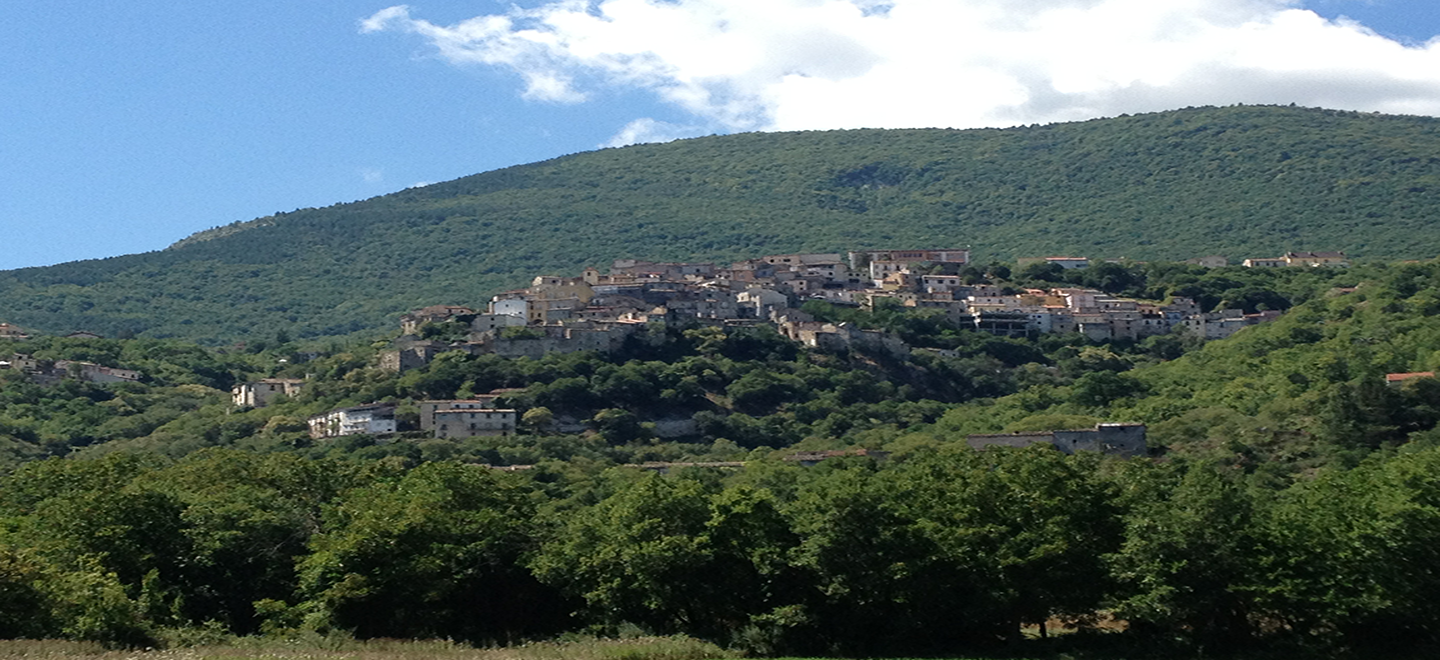 Region: